Lonesome Dove
, one of the greatest Western miniseries ever made, is getting a remake at Netflix. The streaming service
announced
today that it has acquired a new drama series based on the Pulitzer Prize-winning novel by Larry McMurtry and ordered it straight to series. Zoe Kazan and Jev Stuart, who served as co-showrunners on Netflix's upcoming
East of Eden
limited series
, will reunite for
Lonesome Dove
.
All About
Lonesome Dove
The logline reads: “
Gus McCrae and Woodrow Call renew their spirit of adventure as they face an uncertain future, embarking on one final, perilous cattle drive from the Rio Grande to the untamed wilderness of Montana in pursuit of a dream that they have perhaps already outlived. These two former Texas Rangers lead an unforgettable cast of characters across the American west in this sweeping odyssey defined by unrequited longing, unbreakable friendship, brutal frontier justice, and an unwavering pursuit of a meaningful life.
“
Teton Ridge Entertainment tapped Kazan and Stuart to develop the
Lonesome Dove
series.
The original miniseries featured one hell of a cast, with Robert Duvall, Tommy Lee Jones, Danny Glover, Diane Lane, and Anjelica Huston leading the series. It was hugely successful, earning rave reviews and huge ratings. At the 1989 Emmy Awards, it earned 18 nominations and seven wins. Several sequels were released, including
Return to Lonesome Dove
, but none had the same impact.
Statements, Statements, Statements!
In a statement, Zoe Kazan and Jeb Stuart said, “
After our singular experience on
East of Eden
, we are thrilled to be teaming with Netflix again, along with Teton Ridge Entertainment, to bring Larry McMurtry's western classic to life. We come to this material with love and respect, and can't wait to hit the trail with Gus and Call and the rest of these beloved characters. Yee-haw.
“
Jinny Howe, Netflix Head of Scripted Series, UCAN, added, “
Lonesome Dove
is one of the great American stories, and there was no question we wanted to follow Zoe and Jeb wherever they went next. After
East of Eden
, we know exactly what they’re capable of - the depth of character, the sweep of place, the emotional precision. This material deserves that level of care. In their hands, it’s going to be something extraordinary. We’re excited to partner with Teton Ridge to bring this legendary story to life.
“
And finally, Teton Ridge Entertainment President Jillian Share said, “
Lonesome Dove
is the kind of story that only comes along once in a generation. Its characters, scope and deeply human portrait of the American West have made it an enduring classic, and we see an extraordinary opportunity to bring Larry McMurtry’s world to a new generation of audiences. We’re thrilled to partner with Netflix and for Zoe and Jeb to reimagine this landmark story while preserving the heart and spirit that have made
Lonesome Dove
so beloved.
“
I’m always down for another Western series, so I’m cautiously optimistic that Netflix can do justice to
Lonesome Dove
. What do you think?
The post
Lonesome Dove: The greatest Western miniseries ever made is getting a remake at Netflix
appeared first on
JoBlo
.
Adria Arjona played Bix Caleen in both critically acclaimed seasons of
Andor
, which fulfilled a lifelong dream of joining the
Star Wars
franchise. However, she very nearly joined a galaxy far, far away several years earlier… in what would be the franchise’s first box-office bomb.
Adria Arjona Was Almost in
Solo: A Star Wars Story
While appearing on the
Happy Sad Confused
podcast, Arjona revealed that she had auditioned to play Qi’ra in
Solo: A Star Wars Story
. She got pretty far in the process, even auditioning with Alden Ehrenreich in front of Phil Lord and Christopher Miller, who were the
original directors
of the movie.
“
I guess I'm confessing this now. I was with Alden [Ehrenreich]. Phil [Lord] and Chris [Miller] were there,
” she said. “
I don't think I've ever been more nervous in my life. They put you in a suit, and my biggest dream ever was to be in a Star Wars movie.
“
She continued, “
I never thought about the sequels or anything. It was more the emotional attachment of ‘Will I ever be in Star Wars?’ I just wanted to be in Star Wars, and the fact that I had that opportunity to be a leading character in a Star Wars movie was like, ‘Wow. This would be insane.’
“
Of course, Emilia Clarke got the role of Qi’ra, but Arjona is grateful she ultimately missed out. “
I'm so thankful I didn't get it,
” she said. “
I wouldn't have been in Andor, and Bix is the only character I have tattooed on my body.
“
As we know,
Solo
flopped, and the potential sequel was scrapped. Meanwhile,
Andor
has become one of the more beloved Star Wars projects of the Disney era.
Onslaught
Arjona is currently starring in
Onslaught
, a new action-horror film by Adam Wingard. She plays an army sniper who struggles to protect her young daughter from an army of genetically engineered super soldiers who escaped from a secret military facility.
Although he was very excited for this one, our own Chris Bumbray felt a little let down. “
I was frustrated by
Onslaught
. I wanted to love it, and indeed I actually did love the first hour of the movie, which perfectly sets the stage for an epic showdown between Arjona's Celeste and The Butcher, but when it happens, it doesn't even come close to living up to the buildup,
” he wrote. “
The action is a letdown, and a movie that has three unstoppable bad-guy killers in it should have been more explosive. It's still decent and worth seeing, but for me, it didn't live up to its promise.
” You can check out the rest of his review
right here
.
Update
: In a statement to
Deadline
, Nicolas Cage has reacted to
Spider-Noir
getting cancelled, and in typical Cage fashion, he doesn’t seem too bothered. “
For me, one season is perfect, having said what I wanted to say with this dangerous, innovative, pop-art Spider-Man,
” Cage said. “
Onwards, upwards, inwards.
“
-Original article follows-
Spider-Noir
has spun his last web as Prime Video has
cancelled
the series after just one season. Although the series was a hit with critics and fans, viewership wasn’t as impressive as it should have been, especially given how expensive it was to produce.
What Killed
Spider-Noir
?
Spider-Noir
had a successful launch, with over 851 million minutes viewed in its first week in the U.S. and a total of 2.6 billion minutes viewed over its first six weeks. However, it fell off the streaming service’s top 10 rankings sooner than expected.
The series was the first successful collaboration of a multi-title deal between Amazon MGM Studios and Sony Pictures Television for projects based on Sony’s stable of Marvel characters. The other was
Silk
, another
Spider-Man
spinoff, but it was
shelved
.
Despite the cancellation of
Spider-Noir
, the partnership between Amazon and Sony will continue. In fact, there are multiple projects in the works and Deadline’s report states that one of them is actually nearing a series order. So we should hear more about that soon.
What We Thought
Cage stars in
Spider-Noir
as Ben Reilly, an “
aging and down on his luck private investigator in 1930s New York who is forced to grapple with his past life as the city's one and only superhero.
” Cage first voiced the character in
Spider-Man: Into the Spider-Verse
. The rest of the cast includes Lamorne Morris as Joe “Robbie” Robertson, Karen Rodriguez as Janet Ruiz, Li Jun Li as Cat Hardy, Brendan Gleeson as Silvermane, Jack Huston as Sandman, Abraham Popoola as Tombstone, and more.
The first season largely wrapped up the story, but it was hoped the show would return for more.
“
The series also serves as the single best project from Sony's Spider-Man Universe that does not feature Tom Holland,
” wrote our own Alex Maidy in his
review
. “
Nicolas Cage has rarely been better as this character, allowing him to channel his well-known love of cinema and comic books, as well as his quirky approach to inhabiting his roles.
Spider-Noir
is a spectacular love letter to a bygone era and the best superhero series in a very long time. Watch it in either presentation, and you will find a lot to appreciate from the music and mood to the costumes and special effects. Who would have thought this would end up being one of the best
Spider-Man
projects ever? I hope we get more seasons that continue to expand on this specific slice of the multiverse.
” Oops. I guess not.
What do you think of
Spider-Noir
being cancelled after just one season?
The post
Nicolas Cage reacts after Spider-Noir cancelled by Prime Video after one season
appeared first on
JoBlo
.
Neon has released the first teaser trailer for
Artificial
, Luca Guadagnino's upcoming drama which recounts the tumultuous period at the artificial intelligence company OpenAI in 2023, when CEO Sam Altman was fired and rehired within days.
Who’s In It?
Andrew Garfield (
We Live in Time
)
stars as Altman
, while Yura Borisov (
Anora
) plays Ilya Sutskever, a co-founder who led the movement to boot Altman out of the company, Monica Barbaro (
A Complete Unknown
) plays chief technology officer Mira Murati, Cooper Hoffman (
The Long Walk
) plays board chairman Greg Brockman, and Ike Barinholtz (
The Studio
)
plays Elon Musk
.
The script was penned by Simon Rich (
Miracle Workers
), who also produces alongside Heyday Films' David Heyman and Jeffrey Clifford, as well as Jennifer Fox and Guadagnino.
Amazon Dropped It, Neon Picked It Up
Originally,
Artificial
was slated to be distributed by Amazon MGM Studios, but it was abruptly dropped in February…just days after Amazon announced plans to invest $50 billion in OpenAI.
Thankfully, Neon came to the rescue and picked up the project. Just
last month
, Garfield was asked if he was surprised that Amazon dropped the film.
“
I was and I wasn't. I think there are certain things that fit certain places and don't fit other places and they [Amazon] were nothing but supportive and nothing but encouraging while we were making the film,
” he said. “
Luca has a really great relationship with them and I've developed a lovely relationship with them as well. I'm grateful that they've helped the film to find the home that it was meant to find.
“
Cooper Hoffman added he was surprised that Amazon even picked it up in the first place. “
When they dropped it, it was kinda like, 'Oh, yeah, that kinda actually makes sense,' but then it got picked up by Neon, which I'm so happy about,
” he said. “
I love Neon and I couldn't be more happy.
“
When Will
Artificial
Be Released?
Artificial
will have its world premiere at the New York Film Festival on
October 5
and will also screen at the BFI London Film Festival on
October 11
. For the rest of us, Neon has slated the film for a
December 25
release in theaters.
What are your thoughts on the
Artificial
teaser trailer?
The post
Artificial: Andrew Garfield is Sam Altman in teaser trailer for Luca Guadagnino movie
appeared first on
JoBlo
.
The End of Oak Street
wasn’t the box office success it should have been
, but David Robert Mitchell’s sci-fi thriller (which our own Chris Bumbray called the best dinosaur movie since
Jurassic Park
) will soon be available to watch at home.
Warner Bros. Discovery
has announced that
The End of Oak Street
will be available digitally on
September 15
and will be released on 4K Ultra HD, Blu-ray, and DVD on
November 3
.
The End of Oak Street
Special Features
The 4K Ultra HD and Blu-ray release of the film will include the following special features:
Banding Together: The Making of The End of Oak Street
: From concept to execution, explore how director David Robert Mitchell brought his genre-bending vision to life.
Every Creature Tells a Story: The Dinosaurs of Oak Street
: A deep dive into the research and artistry behind ILM’s feathered, scarred, and character-rich dinosaur designs.
The Spinosaurus Attack: Driving Fear on Oak Street
: Breakdown one of the film’s most jaw-dropping set pieces: The Spinosaurus attack.
The description reads: “
After a mysterious cosmic event rips Oak Street from suburbia and transports their neighborhood to someplace unknown, the Platt family soon discovers that their very survival depends on them sticking together as they navigate their now unrecognizable surroundings.
” The film stars Anne Hathaway, Ewan McGregor, Maisy Stella, and Christian Convery.
What We Thought
Bumbray was rather shocked by how much he enjoyed
The End of Oak Street
, which he said made dinosaurs feel truly dangerous again after so many years of
Jurassic World
movies.
“
It was an almost perfect film, with its only flaw being a two-minute coda at the very end that went a little overboard and should have been deleted (the movie has a logical endpoint immediately prior that would have ended it on a magnificent note),
” he wrote. “
But that's a small quibble for one of the most purely enjoyable films of the year, and one that's begging to be seen in theatres. It's the best dinosaur movie since the original
Jurassic Park
.
” You can check out the rest of his review
right here
.
I didn’t get the chance to check out
The End of Oak Street
for myself in theaters, so I might just be giving it a shot once it’s released on 4K. What about you? Will you be adding
The End of Oak Street
to your collection?
The post
When will The End of Oak Street be released on 4K Ultra HD, Blu-ray, and Digital?
appeared first on
JoBlo
.
Two decades after
Dexter
first introduced the world to Dexter Morgan, Michael C. Hall’s serial killer is still living by The Code. Now, he may be heading into his darkest chapter yet. Paramount+ has released the first official teaser trailer for
Dexter: Resurrection
season 2, which finds Dexter caught between two killers while dealing with an unexpected enemy: a mid-life crisis.
Dexter: Resurrection
season 2 will premiere on
Friday, October 30, 2026
, just in time for Halloween and the
Dexter
franchise’s 20th anniversary.
Hall is back as Dexter Morgan, and the new season once again puts the character in the middle of a deadly game in New York. This time, however, he’s dealing with two killers on opposite ends of their careers.
According to Paramount+, season 2 finds Dexter
caught between caught between two killers - one with decades of notoriety and a lifetime of kills behind him, and the other a fresh young face terrorizing New York in ways no one has ever seen. Meanwhile, Dexter battles a new and unexpected enemy: a mid-life crisis. Harrison continues his own pursuit of justice as father and son face their darkest chapter yet.
After the events of
Dexter: Resurrection
season 1
, the new season has plenty of unfinished business to address. But with multiple killers entering Dexter’s orbit (again), it sounds like his biggest problem may be figuring out which one to deal with first.
Who Is in
Dexter: Resurrection
Season 2?
Hall returns as Dexter Morgan, with Jack Alcott back as his son, Harrison. The returning cast also includes Uma Thurman, Ntare Guma Mbaho Mwine, Kadia Saraf, Dominic Fumusa, Desmond Harrington, and James Remar.
Season 2 is also adding several major names to the
Dexter
universe. Dan Stevens, Bokeem Woodbine, Nona Parker Johnson, and Brian Cox have joined the series as regular cast members. Krysten Ritter will return in a guest-starring role, while Gabriel Luna is also joining the season as a guest star.
Cox is playing the
New York Ripper
, a notorious serial killer with decades of killings behind him. Stevens plays Owen Stark, also known as the
Five Borough Killer
, while Luna plays Ray Ballard, the
Sleepy-Eyed Stranger
. With that many killers running around New York, Dexter Morgan is going to have his work cut out for him.
Dexter: Resurrection
Returns for Season 2 This Halloween
Dexter: Resurrection
comes from Emmy-nominated showrunner and executive producer Clyde Phillips, who returns for the second season alongside Michael C. Hall and executive producers Scott Reynolds, Marcos Siega, Tony Hernandez, and Lilly Burns. The series comes from Paramount Television Studios and Counterpart Studios.
Dexter: Resurrection
season 2 premieres
October 30, 2026
, exclusively on Paramount+ with the Premium Plan. Will you be watching? Check out the teaser trailer, then let us know by leaving a comment below.
The post
Dexter: Resurrection season 2 trailer: Dexter is caught between killers in New York
appeared first on
JoBlo
.
If you’re keeping score at home, this marks the first time
A New Hope
will be presented in IMAX, whether in digital or on film, as part of its highly anticipated anniversary re-release
on February 19, 2027
. As part of Lucasfilm’s yearlong 50th anniversary celebration, the newly restored version of the original movie will be shown at select IMAX 70mm film locations and in select theaters for a limited time.
Shawn Levy’s Starfighter Takes Flight
Then,
on May 28, 2027
, the 50th anniversary weekend of the original Star Wars film’s premiere, Lucasfilm will release
Star Wars: Starfighter
. Filmed for an IMAX release, the movie was shot with IMAX-certified cameras and converted to IMAX 70mm film prints for release in a select number of IMAX film locations.
The project is being directed by Shawn Levy, who has assembled a stacked cast for the galactic adventure. Ryan Gosling (
The Fall Guy
) leads a star-studded lineup that includes Flynn Gray (
Wednesday
), Matt Smith (
Caught Stealing
), Mia Goth (
Pearl
), Aaron Pierre (
Lanterns
), Simon Bird (
The Inbetweeners
), Jamael Westman (
The Essex Serpent
), Daniel Ings (
The Gentlemen
), and Amy Adams (
Man of Steel
). Levy also told Kevin McCarthy that Thomas Newman (
American Beauty
) will compose the score for
Starfighter
.
“I feel a profound sense of excitement and honor as we begin production on
Star Wars: Starfighter
,”
said Levy when the project began.
“From the day Kathy Kennedy called me up, inviting me to develop an original adventure in this incredible
Star Wars
galaxy, this experience has been a dream come true, creatively and personally.
Star Wars
shaped my sense of what story can do, how characters and cinematic moments can live with us forever. To join this storytelling galaxy with such brilliant collaborators onscreen and off, is the thrill of a lifetime.”
The 70mm Renaissance
Demand for 70mm IMAX versions of epic films is increasing after the massive success of Christopher Nolan’s
The Odyssey
. According to
Variety
, the 70mm IMAX version of Nolan’s latest opus grossed $78 million at the global box office, often selling out in many locations for weeks. Recently,
The Odyssey
extended its IMAX residency through September for a historic 11-week run to help meet audience demand.
The IMAX screenings of
Star Wars: A New Hope
are sure to be a significant event for fans, with many likely to dress up for the occasion, lightsabers at the ready. While you could watch
A New Hope
at home on physical media, there’s nothing quite like seeing the film that started it all on a massive IMAX screen, let alone in 70mm. The epic sound design alone of a true IMAX theater is enough to make me want to travel to Toronto, where the better theaters are, just to feel the floor shake when the Star Destroyer first crosses the screen.
Are you planning to make the pilgrimage to catch
A New Hope
or
Starfighter
in 70mm IMAX in 2027? Let us know in the comments below!
The post
The ultimate Star Wars double-feature: A New Hope & Starfighter set for IMAX 70mm screenings
appeared first on
JoBlo
.
Imitation is often called the sincerest form of flattery, making today’s
South Park
news quite laudatory. Following their Emmy win for Outstanding Animated Program after 29 years,
South Park
is making a big change and renaming the show
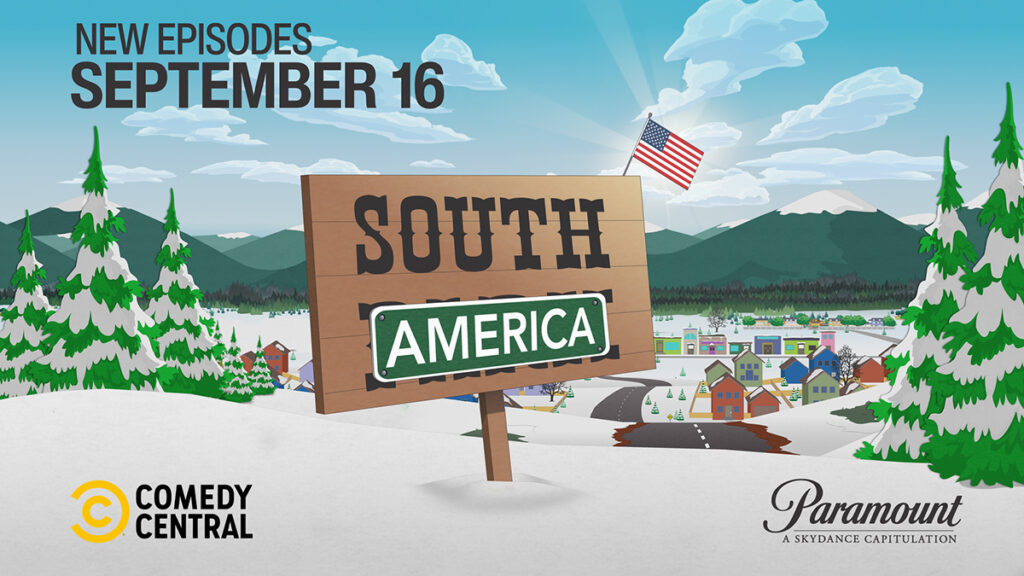
South America
.
According to creators Trey Parker and Matt Stone:
“Inspired by the bravery and patriotism of Apple and Google, we are changing the name of South Park to SOUTH AMERICA. We especially want to thank our parent company Paramount — a Skydance Capitulation.”
Season 29 Release Date and Streaming Schedule
The 29th Season of the award-winning series will premiere
on Wednesday, September 16, at 10 pm ET/PT on
Comedy Central
. New episodes will be available to stream on
Paramount+
worldwide, with next-day availability in the U.S., Canada, and Australia. Additional new episodes will premiere
on Wednesdays: September 30, October 14, October 28, November 11, and November 25
.
Taking Aim at Recent Headlines
While Parker and Stone credit the
“bravery and patriotism”
of Apple and Google for inspiring the rebrand, the title change is clearly a direct shot at President Donald Trump, who, in a controversial move, renamed the Gulf of Mexico to the Gulf of America and Lake Ontario to Lake America. Many across the globe have chosen to ignore Trump’s decree, referring to the landmasses by their original names.
30 Years of Irreverence
Meanwhile,
South Park
is nearing its 30th anniversary, which is positively mindblowing. I still remember where I was when I watched the debut episode, “Cartman Gets an Anal Probe,” and the groundswell of fandom that happened shortly thereafter. Following its premiere, you couldn’t go anywhere without seeing someone in a
South Park
t-shirt or hearing someone shout, “You killed Kenny, you bastards!” at the top of their lungs. Yes, we were young, dumb, and starving for attention. At the time,
South Park
felt taboo, like you were getting away with something by watching it. Parents fretted over the show’s mature language and subject matter, while
celebrities
and politicians feared becoming the show’s next target. It’s incredible to think
South Park
has been thriving for almost three decades without losing any of its sting or credibility.
What do you think about
South Park
‘s name change? Do you still watch the series? Let us know in the comments section below.
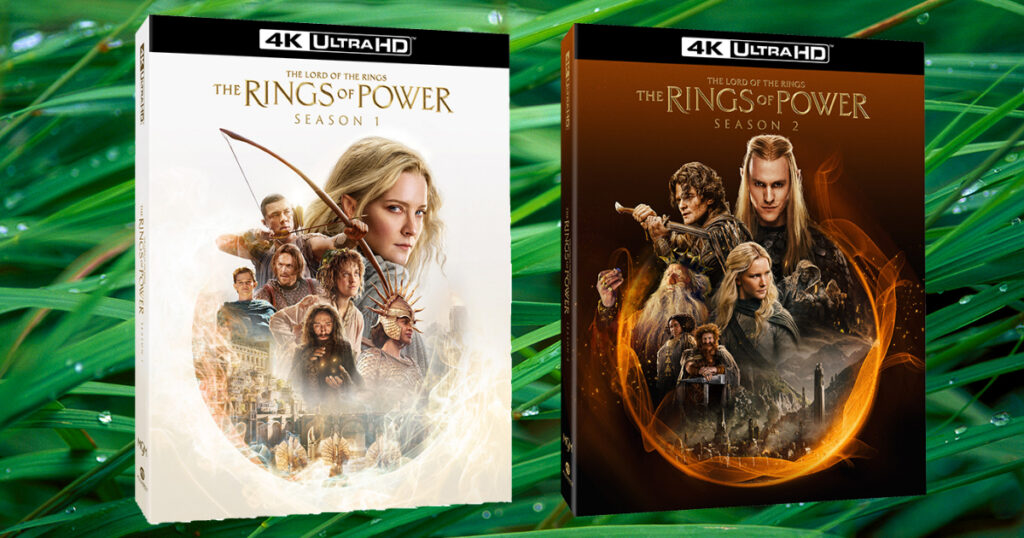
Start making room on your Blu-ray shelves, physical media collectors, because Amazon MGM Studios and Alliance Home Entertainment have officially announced home releases for
The Lord of the Rings: The Rings of Power
Seasons 1 and 2 in
4K UHD Blu-ray
! Both seasons of the massive streaming series are making the leap to physical media with comprehensive, multi-disc physical releases. Fans can look forward to picking up both seasons across 4-disc 4K Ultra HD, standard Blu-ray, and DVD formats starting
November 3
. For collectors looking for high-end shelf real estate, limited-edition 4K UHD SteelBooks will follow shortly after
on December 1
.
A Journey Back to Middle-earth's Second Age
For those needing a quick refresher, the series takes viewers back thousands of years before the events of J.R.R. Tolkien's
The Hobbit
and
The Lord of the Rings
. Set during the legendary Second Age of Middle-earth, this sprawling drama follows an ensemble cast of both familiar and new characters as they confront the long-feared re-emergence of evil. From the darkest depths of the Misty Mountains to the majestic forests of the elf-capital Lindon, and from the breathtaking island kingdom of Númenor to the furthest reaches of the map, these kingdoms and characters carve out legacies that live on long after they are gone.
Bonus Content and Amazon-Exclusive Gift Sets
Both the standard and collector editions of
The Rings of Power
will feature Behind-The-Scenes Bonus Content, giving fans an in-depth look at the massive production design, practical effects, location shooting, and orchestral scoring required to bring Middle-earth to life. In addition to the standard line-up, Amazon will offer exclusive 4K UHD gift sets featuring limited-edition SteelBook packaging alongside collectible art cards, launching just in time for the holiday season
on December 1
.
Finally! I’m not gonna lie, I totally dropped the ball trying to keep up with
The Rings of Power
as new episodes hit Prime Video. Plus, my Amazon account still has ads, which drive me up a wall. I refuse to pay extra just to strip ads from a subscription I already pay for, meaning I rarely spend time watching movies and shows on the platform. With
The Rings of Power
arriving on 4K Blu-ray, I don’t need to worry about bit-rate drops or ad interruptions ever again, and I can digest the entire series at my own leisure. Best of all, those shiny SteelBooks are going to look sweet resting right next to my 4K Blu-ray set of Peter Jackson's original
Lord of the Rings
trilogy.
What do you get when the director of
The Sixth Sense
teams up with the author of
The Notebook
? The answer is
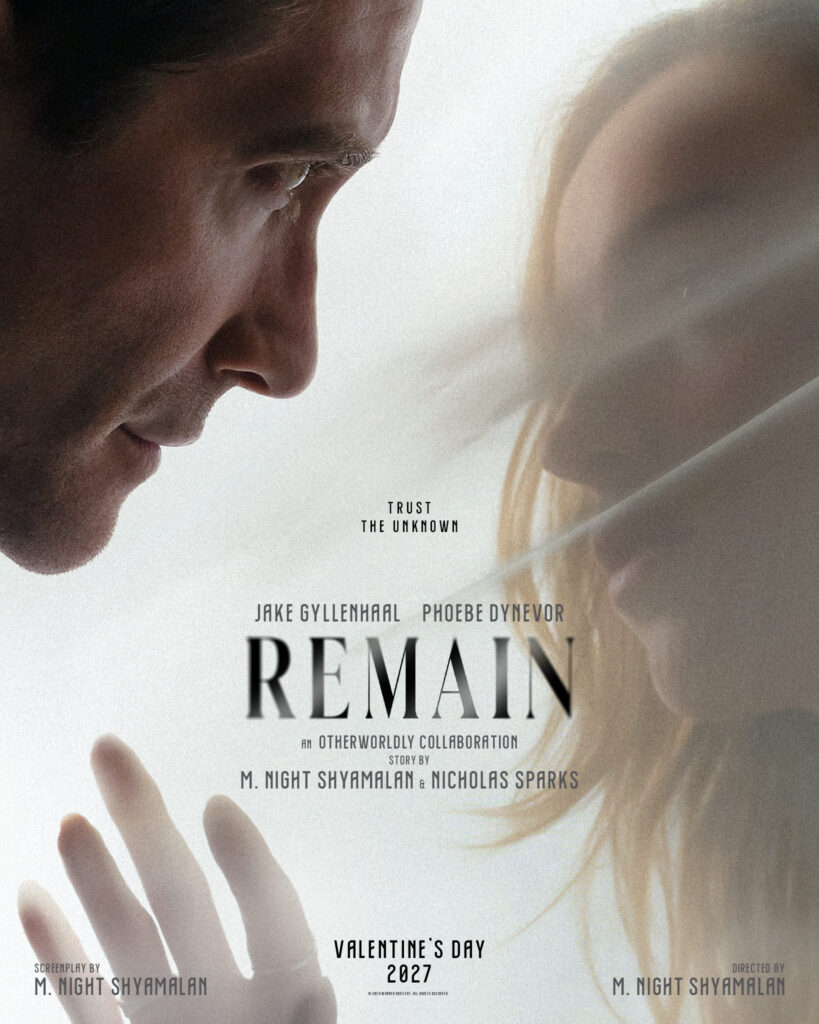
Remain
, a supernatural romantic thriller from M. Night Shyamalan and Nicholas Sparks, and the first teaser trailer has finally arrived. Check it out in the embed above!
Starring Jake Gyllenhaal and Phoebe Dynevor,
Remain
is based on an original story Shyamalan and Sparks created together. The unusual collaboration produced two different versions of the same story: Sparks wrote the novel, while Shyamalan wrote and directed the movie. The film is now set to hit theaters on
February 5, 2027
.
What Is
Remain
About?
Remain
follows Tate Donovan as
he arrives in Cape Cod to work on an architectural project while trying to put his life back together. His encounter with Wren changes everything, as the two form an immediate connection neither of them expected. But Wren’s seemingly idyllic life hides disturbing secrets, and Tate soon finds himself caught up in a mystery involving the supernatural.
Rather than having Sparks write a novelization of Shyamalan’s screenplay, the two creators approached the same story independently for their respective mediums. Sparks’ novel and Shyamalan’s movie therefore tell their own versions of the
Remain
story. That makes
Remain
an unusual Hollywood experiment. It’s not a movie adaptation of a Nicholas Sparks novel, it’s the cinematic counterpart to a story the two creators built together.
Jake Gyllenhaal and Phoebe Dynevor Lead
Remain
Gyllenhaal stars as Tate Donovan, with Dynevor playing Wren. The cast also includes Ashley Walters, Julie Hagerty, Jay O. Sanders, Tracy Ifeachor, Hannah James, Caleb Ruminer, Kieran Mulcare, and Maria Dizzia.
Shyamalan is writing and directing the movie, as well as producing alongside his longtime collaborators. Warner Bros. is distributing the film.
The director has previously described
Remain
as a supernatural love story that combines the things that interest both him and Sparks: romance, suspense, mystery, and the possibility that there are forces in the world we don’t fully understand. Shyamalan has also previously said that
Remain
is his highest-testing movie of his career, making the trailer’s arrival interesting for fans wondering whether his latest movie can deliver another Shyamalan-style supernatural mystery.
What did you think of the
Remain
teaser trailer? Let us know by leaving a comment below.
The post
Remain teaser trailer: M. Night Shyamalan and Nicholas Sparks' supernatural romance unveils its first look
appeared first on
JoBlo
.
With
The Sun Never Sets
, acclaimed indie filmmaker Joe Swanberg returns to his roots of intimate, character-driven storytelling, delivering a tender and sharply observed look at modern romance. Sitting down with writer-director Swanberg alongside stars Jake Johnson and Cory Michael Smith, it immediately becomes clear that the chemistry on screen reflects a deeply collaborative off-screen bond. The trio approached the project alongside star Dakota Fanning, allowing real-world messiness and emotional ambiguity to shape the romantic drama. The latest in Swanberg’s filmography of character-driven indie films in the mumblecore subgenre,
The Sun Never Sets
is a festival favorite that marks a stellar new performance from the trio of stars along with supporting actors Anna Konkle, Debby Ryan, and Lamorne Morris.
Set against the luminous backdrop of an Alaskan summer, the film follows Wendy (Dakota Fanning), a young woman who finds herself at a life crossroads with her older, divorced boyfriend, Jack (Jake Johnson). Sensing their differing timelines regarding marriage and starting a family, Jack suggests they take a trial separation to determine what they truly want. That already delicate pause spirals into emotional chaos when Wendy’s spontaneous ex-flame, Chuck (
Cory Michael Smith
), unexpectedly re-enters her life, sparking a tangled, funny, and bittersweet love triangle under the midnight sun.
During our conversation, Johnson and Smith reflected on the nuance required to keep the central conflict grounded rather than melodramatic. Johnson emphasized how important it was to play Jack as an honest partner grappling with age-gap realities and the fear of holding someone back. Smith shared how refreshing it was to avoid typical romantic-rival tropes, leaning instead into Chuck's own vulnerability and flawed attempts at growth.
The Sun Never Sets
succeeds as a refreshingly honest portrait of romance, timing, and the courage it takes to figure out what comes next.
The Sun Never Sets
is
now playing in theaters.
Check out our review!
The post
Interview: Director Joe Swanberg and stars Jake Johnson and Cory Michael Smith discuss The Sun Never Sets
appeared first on
JoBlo
.
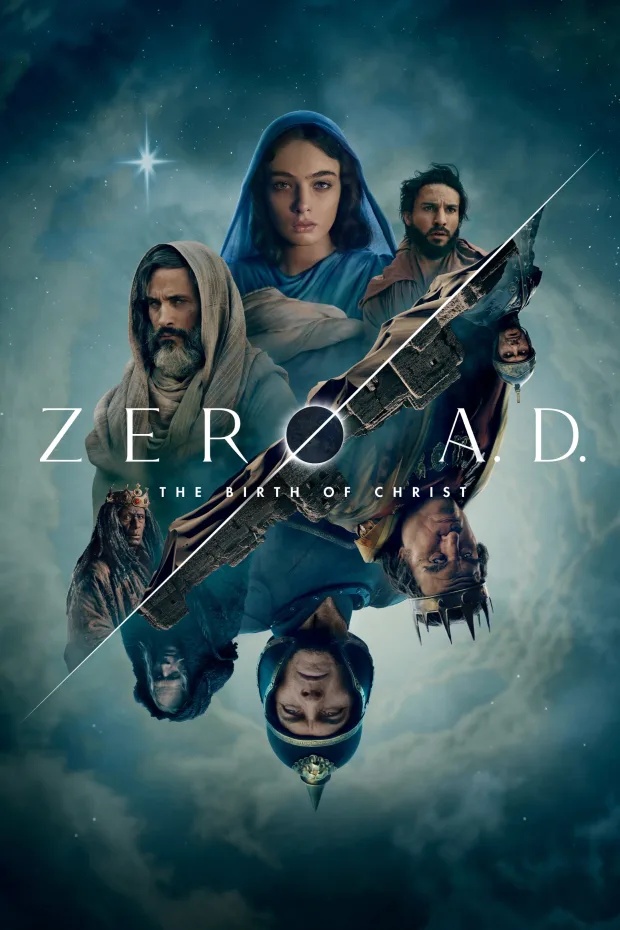
We’ve seen the story of Jesus’ birth many times, but we’ve rarely seen it look quite like this. The new trailer for
Zero A.D.: The Birth of Christ
puts a suspenseful, thriller-like spin on the Nativity story, with
The Passion of the Christ
star Jim Caviezel taking on the role of the ruthless King Herod.
Coming from Angel Studios and directed by Alejandro Monteverde, the filmmaker behind
Sound of Freedom
, the movie also stars Deva Cassel as Mary, Sam Worthington as Herod’s son Antipater, and Jamie Ward as Joseph.
Here’s the synopsis:
An empire in decay. A ruler consumed by fear. A star rising over Bethlehem. When Christ is born, Herod's terror erupts into the slaughter of the innocents, and Mary must protect the child promised to save the world. As violence spreads and hope flickers, the true battle begins-not for a throne, but for the soul of mankind.
Monteverde describes the movie (to
USA Today
) as a story about a baby who was persecuted from the moment he was born, saying that perspective gave the familiar story a sense of danger and urgency. He describes
Zero A.D.
as a “spiritual thriller,” built around the conflict between darkness and light.
Jim Caviezel Plays King Herod in
Zero A.D.
Perhaps the most immediately intriguing aspect of
Zero A.D.
is Caviezel’s role as King Herod. Caviezel is best known for playing Jesus in Mel Gibson’s
The Passion of the Christ
, so seeing him on the opposite side of the story is an interesting piece of casting. In
Zero A.D.
, he plays Herod as a paranoid ruler determined to destroy the child he believes could eventually take his throne.
The cast also includes Gael García Bernal as Mary’s father Joachim, David Harewood as Balthazar, and Ben Mendelsohn as Nahash.
While the basic events are familiar, Monteverde’s approach is designed to emphasize the danger surrounding the Holy Family. The birth of Jesus isn’t presented simply as a peaceful religious event. It’s the beginning of a dangerous pursuit, with a powerful king willing to kill innocent children to eliminate a potential rival. That gives
Zero A.D.
a very different flavor from traditional Nativity movies. The story remains rooted in the Biblical account, but the filmmakers are approaching it as a suspenseful cinematic thriller about persecution, survival, faith, and the battle between good and evil.
Zero A.D.: The Birth of Christ
arrives in theaters on
December 11, 2026
. Will you be watching? Check out the trailer, then let us know by leaving a comment below.
The post
Zero A.D. Trailer Turns the Nativity Into a Dark Thriller With Jim Caviezel as King Herod
appeared first on
JoBlo
.
The Legend of Zelda
has quite a bit to live up to. Nearly forty years after the Nintendo game
The Legend of Zelda
first made its way out into the world, a live-action film adaptation is now in the works, with
Maze Runner
and
Kingdom of the Planet of the Apes
director Wes Ball at the helm. Shigeru Miyamoto, producer and game director at Nintendo (and co-creator of
The Legend of Zelda
), has excitedly been involved with the project and even made announcements on his own social media. He would announce the casting of Zelda and Link with screen test shots of Bo Bragason and Benjamin Evan Ainsworth in their respective roles. Sony and Nintendo are slated to release the film on
April 30, 2027
.
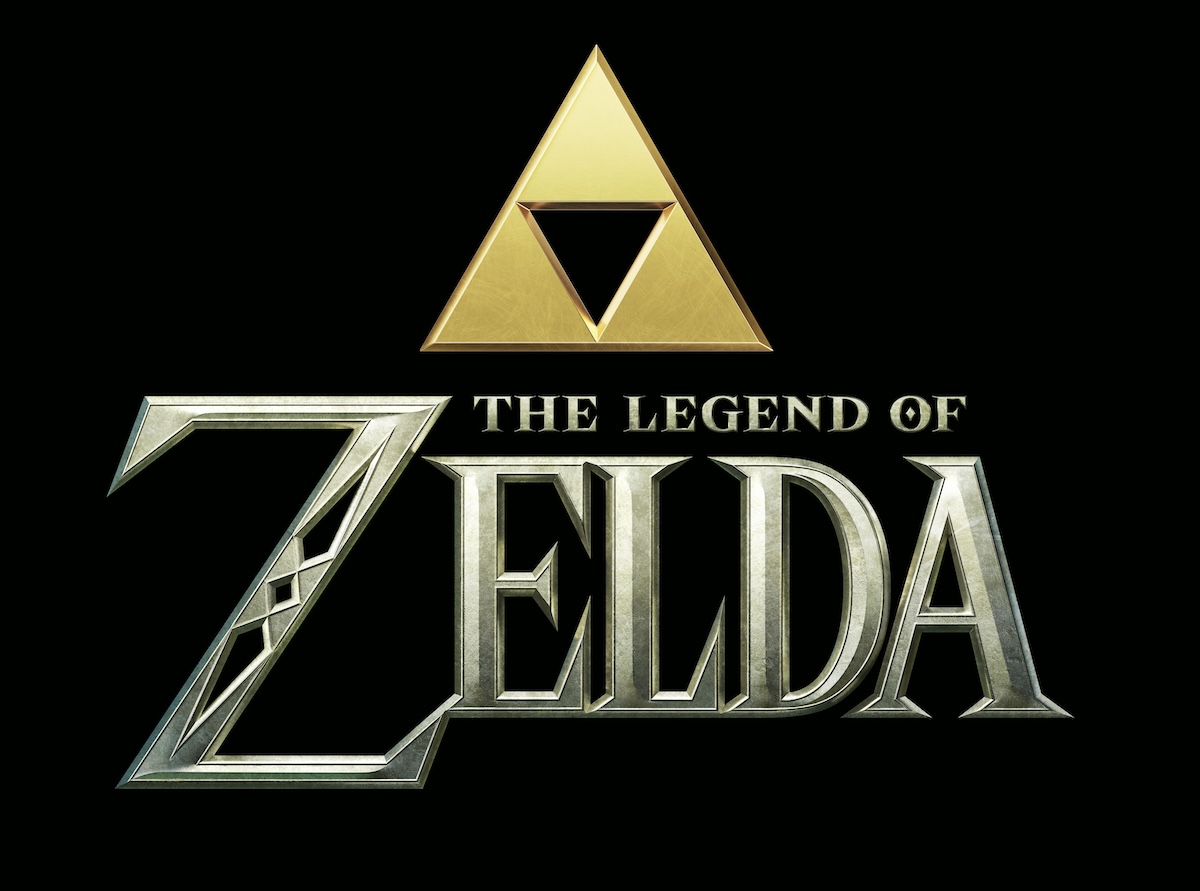
Nintendo unveils the movie’s logo
This year’s Nintendo Direct will go live today with updates from the company, including the
Legend of Zelda
movie. It’s likely the trailer will premiere during the live broadcast, but Nintendo won’t leave you hanging. The famous video game empire has decided to whet your whistle with a little tease by unveiling the official logo from the movie, which you can take a look at below.
Since the official word broke that Nintendo is pursuing a live-action adaptation of
The Legend of Zelda
,
Maze Runner
director Wes Ball, who will be overseeing Hyrule, has said he wants
The Legend of Zelda
to feel like a live-action Miyazaki film, which is likely to please dedicated fans of the Nintendo property. Hayao Miyazaki (
Spirited Away
,
The Boy and the Heron
,
Princess Mononoke
) is the legend who co-founded Studio Ghibli and is often called the "Godfather of Anime." Ball says his vision for
The Legend of Zelda
is
"this awesome fantasy-adventure movie that isn't like
Lord of the Rings
, it's its own thing. I've always said, I would love to see a live-action Miyazaki. That wonder and whimsy that he brings to things, I would love to see something like that."
Possible Nintendo Direct News
Meanwhile, on the video game side of things. Last week, Nintendo announced a DLC update to their previous entry in the
Mario Kart
franchise with a new eight-person split-screen mode and real-face avatars for
Mario Kart 8
. It is also likely that they will show footage from their previously announced
Ocarina of Time
remake, which launches in November. Some screenshots are already making their rounds online, but nothing has been confirmed at the moment.
The post
Nintendo teases with the logo for The Legend of Zelda ahead of today’s Nintendo Direct
appeared first on
JoBlo
.
Before Wes Craven made
Scream
and changed the horror genre all over again, he was presented with a potential sequel to
Shocker
. That sequel never happened, but fans can now read the
unproduced treatment for
Shocker 2
for free
, thanks to author and screenwriter Nicholas Grabowsky, who has shared the long-lost treatment on
his website
!
Grabowsky is a prolific horror and fantasy writer. He wrote the novelization of
Halloween 4: The Return of Michael Myers
, as well as novels including
Pray, Serpent’s Prey
;
The Everborn
, and
The Wicked Haze
. He has also worked in comics, nonfiction, publishing, and independent film, and founded Black Bed Sheet Books, a publishing house focused primarily on horror and fantasy.
According to Grabowsky, he was asked to write a sequel treatment for the 1989 Craven film in
1992
. He spent several months developing the story, with the intention of moving on to a screenplay if the treatment was approved. Craven responded positively to his work, but ultimately decided to pursue another project instead. That project was
Scream
.
That decision obviously worked out pretty well for Craven.
Scream
became one of the most influential horror movies of the 1990s and launched a franchise that continues to this day. But
Shocker
fans have spent decades wondering what a sequel might have looked like. Now they can finally find out.
What Was
Shocker 2
About?
Grabowsky’s proposed sequel would have brought the characters from the first
Shocker
into a new supernatural story shortly after the events of the original movie. Horace Pinker, the electrically powered serial killer played by Mitch Pileggi, would have faced a new supernatural adversary.
The sequel would have retained the bizarre, larger-than-life tone of
Shocker
while expanding its supernatural mythology. And Grabowsky had an especially strange idea for the new villain:
when he’s executed in the gas chamber, the character enters a book and later emerges in a gas-like form.
He wants to show Pinker that books are better for him than television. It’s exactly the kind of bonkers concept that makes an unproduced sequel treatment worth digging up decades later.
Grabowsky also says his treatment would have continued the first movie’s television-themed absurdity while introducing this new supernatural threat for Pinker to confront.
Read the
Shocker 2
Treatment for Free
As mentioned, Grabowsky has now made the
Shocker 2
treatment available to read for free through his website, allowing fans to finally see the sequel that never made it to the screen. The author has remained proud of the project over the years, particularly because of the praise he says he received from Craven for his efforts.
It’s impossible to know exactly how
Shocker 2
would have turned out had it been produced, of course. The treatment was never developed into the movie Grabowsky originally hoped to write. Instead, Craven moved on to
Scream
, leaving
Shocker
as one of the more unusual standalone entries in his filmography.
Still, the existence of Grabowsky’s treatment offers horror fans a fascinating glimpse at an alternate timeline:
one where Wes Craven followed up
Shocker
before making
Scream
.
And given the gloriously strange premise Grabowsky came up with, it’s hard not to wonder what that movie might have been.
Read the
Shocker 2
Treatment for Free
– then let us know what you thought of it by leaving a comment below!
The post
Unproduced Shocker 2 treatment Wes Craven passed on before making Scream is now free to read
appeared first on
JoBlo
.
Last year, Dwayne Johnson underwent a change from his usual big-budget action spectacles to star in an A24 character drama biopic from director Benny Safdie.
The Smashing Machine
saw Johnson change his look and mannerisms to become MMA fighter Mark Kerr and Johnson garnered much praise for his performance. Johnson made it clear that while it looked like he was exploring bolder projects outside of his usual fare, he was not making a complete career change and this Christmas, you can catch him in
Jumanji: Open World
.
class="wp-block-heading" id="h-free-byrd">
Free Byrd
After working with Safdie on
The Smashing Machine
, the two are already set to reunite on another project called
Lizard Music
. Now,
Variety
is reporting that Johnson has lined up another dramatic film called
Free Byrd
from Greg Kwedar, the director of
Sing Sing
. Per Variety, the movie is about Johnson
“as a Las Vegas motorcycle stuntman who conceals his dementia diagnosis from everyone, including his mechanic brother, as he risks everything on one last jump.”
The film, the official logline explains that the film
"examines and confronts the mind's vast mysteries and the beauty and power of asking for help before it's too late."
In addition to directing, Kwedar will also rework the screenplay, which was originally written by Jon Boyer and further drafts by
The Peanut Butter Falcon
writer-directors Michael Schwartz and Tyler Nilson.
Johnson spoke on the project,
"
Free Byrd
is a gift in many ways. Emblematic of life's sacred beauty, as well as life's harsh and callous reality. The subject matter of 'Free Byrd' has become deeply personal to Greg Kwedar and myself as we've started to unpack this fateful journey together. Artists Equity have been incredible filmmaking and artistic partners, who not only share Greg's vision for the film, but who are all connected to our story in their own unique and personal ways. When the mind of a loved one begins to slip away, life sure takes on a whole new meaning."
Ben Affleck and Matt Damon will also be producing through their Artists Equity production company. Damon and Affleck have stated,
"This is a project that all of us at the company have connected with personally. Greg is one of the most exciting writer-directors working today, and Dwayne is an extraordinary talent and person. We are extremely excited that they have chosen to make this with us and very much look forward to sharing the finished film with audiences."
class="wp-block-heading" id="h-johnson-s-post">
Johnson’s Post
Johnson commented further on the project by posting the news on his
Instagram
with a caption that reads,
“I've come to realize a few things in life.
One of them is how deeply soul stirring, and heart aching this disease is as it grips so many of us. I've realized that it's our most profound test of grace, to watch our loved one, slip away. And despite how protective, caring and loving our hands are, there's nothing we can do. Except keep them as happy as we can. For as long as we can.
My journey with writer/director @gkwedar has already been life changing. A deepening bond through the experience of this disease, that will live far beyond this film. Thank you brother.”
The post
Dwayne Johnson continues his drama run as a stuntman with dementia in Free Byrd, with Ben Affleck and Matt Damon producing
appeared first on
JoBlo
.
Godzilla survived
Godzilla Minus One
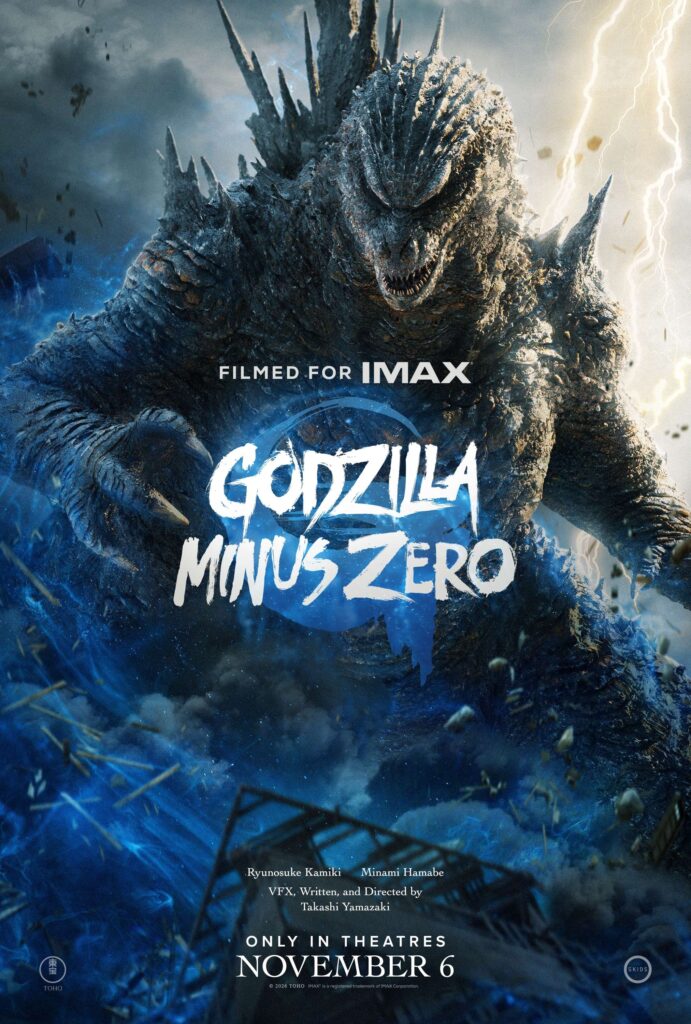
, and he’s about to make Japan’s post-war recovery even more difficult. TOHO and GKIDS have released a new trailer and theatrical poster for
Godzilla Minus Zero
, the highly anticipated sequel from writer/director Takashi Yamazaki. Check out the trailer in the embed above!
The new footage picks up two years after the events of
Godzilla Minus One
, with Japan attempting to rebuild and reclaim some semblance of normal life after World War II and Godzilla’s devastating attack. That peace doesn’t last. The trailer confirms that Godzilla survived the previous movie and is once again threatening Japan. We also get a glimpse of the latest effort to exterminate the monster, suggesting that humanity has learned a few things about fighting the King of the Monsters. But whatever they’re planning, Godzilla appears to be more than capable of fighting back.
The sequel introduces several new characters, including Masami Nagasawa as Makoto Aoyama, a genius weather forecaster assigned to the Disaster Response Bureau. Jun Kunimura also joins the cast as Dr. Ogata, while Ko Maehara plays Akira Hagiwara, an assistant to Professor Murakami, the character played by Min Tanaka.
Motosuke Iida is also returning as Akio Itagaki, the Toyo Balloon section chief who contributed to the Godzilla extermination operation in
Godzilla Minus One
.
Godzilla Minus Zero
Continues the
Minus One
Story
Godzilla Minus Zero
takes place in
1949
, two years after the events of
Godzilla Minus One
, and continues the story of the Shikishima family as they face another devastating calamity.
Ryunosuke Kamiki returns as Koichi Shikishima, while Minami Hamabe reprises her role as Noriko Shikishima. Hidetaka Yoshioka, Yuki Yamada, Kuranosuke Sasaki, Sakura Ando, and Mio Tanaka also return.
Min Tanaka plays Kanji Murakami, a biologist carrying psychological scars from his experiences during the war.
Yamazaki has previously emphasized that he wants to maintain the balance between the human drama and kaiju spectacle that made
Godzilla Minus One
such a success. That approach appears to remain intact here, even as the sequel promises to significantly increase the scale of the monster action.
The official synopsis sets up a bleak situation:
War reduced Japan to zero, and Godzilla plunged it into minus. Two years have passed since then, and the country has faced agonizing struggles to achieve recovery and finally reclaim its daily life. Just as humanity managed to cling to a hard-won peace, a new threat strikes, crushing hope in an instant. There is no third time. Everything ends here.
Whether
Godzilla Minus Zero
is actually intended to be the conclusion of Yamazaki’s story remains to be seen, but the movie certainly isn’t shy about presenting this as a potentially final confrontation.
Godzilla Minus Zero
Was Filmed for IMAX
If the new trailer wasn’t enough to convince you that
Godzilla Minus Zero
belongs on the big screen, the sequel has another major distinction. The movie was shot entirely in Japan and is the
first-ever Japanese production filmed for IMAX
. Yamazaki and his team used high-definition digital cameras certified by IMAX, with the imagery and sound optimized specifically for IMAX presentation.
Godzilla Minus One
became a worldwide phenomenon thanks to its combination of modest resources, spectacular visual effects, and human storytelling.
Godzilla Minus Zero
promises to take that formula and make the monster spectacle bigger without losing the human perspective.
Yamazaki returns as writer and director, as well as overseeing the visual effects, following
Godzilla Minus One
‘s historic Academy Award win for Best Visual Effects.
Godzilla Minus Zero
will have its world premiere as the Spotlight Gala selection at the
64th New York Film Festival on September 26
. The movie opens in Japan on
November 3, 2026
, which is Godzilla Day, before beginning its North American theatrical release on
November 6
.
The King of the Monsters is back. Are you excited? Let us know by leaving a comment below.
The post
Godzilla Minus Zero Trailer Unleashes the King of the Monsters and Teases a New Threat
appeared first on
JoBlo
.
Zach Cregger isn’t slowing down. The filmmaker behind
Barbarian
and
Weapons
is currently gearing up for the release of his new take on
Resident Evil
, but he’s already looking ahead to what comes next. One of those projects is
The Flood
, a mysterious project that Cregger says came together during an intense burst of inspiration sparked by his desire to work with Steven Spielberg. And while Cregger isn’t ready to reveal much about what
The Flood
is actually about, the story of how he came up with it might be almost as intriguing as the movie itself.
Zach Cregger Had Five Days to Come Up With
The Flood
Cregger explained to
Deadline
that
The Flood
came about because he was excited about the possibility of working with Spielberg. There was a brief window in which Cregger could come up with an idea and potentially link up with the legendary filmmaker, leaving him with roughly five days to figure out what that idea might be. The pressure sent him into what he describes as a creative frenzy.
While watching a movie during that period, Cregger saw a character enter an abandoned spaceship. His wife then made a simple observation that immediately got his imagination going.
"There's nothing scarier than being trapped in space."
Cregger started wondering what could possibly be stranger or more frightening than someone entering an abandoned spaceship and discovering something disturbing inside. Then the entire movie idea suddenly came to him.
"In a flash, I had the whole movie explode in front of my eyes."
Cregger says he immediately knew what the movie could be and probably even stood up and announced that he had figured it out. He describes the experience as a "total ridiculous moment," but clearly one that stuck with him.
He then wrote
The Flood
while simultaneously working on
Resident Evil
.
Cregger Says He Would “Burn My House Down” to Make
The Flood
We still don’t know exactly what Cregger has planned for
The Flood
, and that’s probably for the best. The filmmaker has kept the project mysterious, with the Deadline interview offering more insight into his passion for the movie than its actual story. But Cregger made one thing abundantly clear: he really, really wants to make this movie.
Discussing his feelings about
The Flood
, he told Deadline:
"I will burn my house down to make this movie."
That’s obviously hyperbole, but it says a lot about how strongly Cregger feels about the project. He went on to imagine God himself giving him the choice between making the movie and losing his house, with Cregger joking that he would accept the deal without hesitation.
Resident Evil
Is Cregger's One Franchise Exception
Cregger’s comments about
The Flood
become even more interesting when viewed alongside what he has said about
Resident Evil
. Cregger has been adamant that he doesn’t want to become a filmmaker who simply jumps from one established franchise to another. Speaking with Deadline, he said that he has been very clear about not wanting to tackle other franchises after
Resident Evil
.
The reason he made an exception for
Resident Evil
is that he’s genuinely a fan of the games and believes in the story he developed for the movie.
"I'm making the
Resident Evil
movie that I wish existed."
Cregger doesn’t appear interested in taking over franchises simply because Hollywood offers him the opportunity. He wants to make movies that excite him. And
The Flood
sounds like the purest version of that: an idea that appeared almost fully formed in his head, written during a creative frenzy, and a movie he is now so passionate about making that he’d apparently sacrifice his house for it.
What Is
The Flood
About?
For now,
that’s the big mystery
. Cregger has revealed the basic inspiration behind
The Flood
, but he hasn’t disclosed the actual story details. All we know from his comments is that the project was born from the idea of being trapped in space and asking what could be even more frightening than that. Considering Cregger’s track record, that is enough to make
The Flood
one of the more intriguing upcoming horror projects to keep an eye on.
Before we get there, though, audiences will get to see what Cregger has done with
Resident Evil
. The film stars Austin Abrams as Bryan, a medical courier who becomes caught in the middle of a biohazard outbreak, and Cregger has promised that it will be the most violent movie he has ever made. Early footage has already generated
enthusiastic reactions
, with JoBlo’s JimmyO praising the first 30 minutes for balancing horror, atmosphere, and comedy.
Resident Evil
arrives in theaters on
September 18, 2026
. As for
The Flood
, Cregger clearly has no shortage of enthusiasm. Now we just have to find out what was so terrifying that it made him see an entire movie in a flash.
Coming our way from Warner Bros. and Amblin,
The Flood
is set to reach theatres on
August 11, 2028
. Are you interested? Let us know by leaving a comment below.
The post
Zach Cregger Reveals the Inspiration Behind His Upcoming Movie The Flood
appeared first on
JoBlo
.
Star Trek
has been one of my favourite franchises for as long as I can remember. With sixty years of television and cinema behind it, the franchise has expanded into a massive universe with something for everyone. But today, it’s a special day as on
September 8th, 1966
, the original series premiered with the episode “The Man Trap”. To celebrate the franchise’s anniversary, we're going back to where it all began. Every
Star Trek
fan remembers the episode that made them fall in love with the franchise. For some it’s
The Trouble with Tribbles.
For others it’s
Balance of Terror
or
The City on the Edge of Forever.
All these years later, these stories still define what
Star Trek
can be.
Over the course of just three seasons,
Star Trek: The Original Series
gave us thought-provoking sci-fi, thrilling space adventures, unforgettable moral dilemmas, and some of the most iconic characters in television history. Not every episode was a winner (looking at you,
Spock’s Brain
), but when the show was firing on all cylinders, it produced some of the greatest science fiction ever put to screen.
So, let's punch it to warp speed and look back at the 10 best
Star Trek: The Original Series
episodes.
The Original Series
ran for 79 episodes (or 80 if you count
The Cage
) between 1966 and 1969. The episodes below were chosen based on storytelling, cultural impact, character development, and long-term influence on the
Star Trek
franchise, or, you know, just because I love them.
The City on the Edge of Forever
(Season 1, Episode 28)
After Dr. McCoy accidentally alters history, Kirk and Spock travel to 1930s Earth to restore the timeline before the future is lost forever.
Release Year: 1967
Season / Episode: Season 1, Episode 28
Directed By: Joseph Pevney
Written By: Story by Harlan Ellison; teleplay by D. C. Fontana
Why It’s Essential: A heartbreaking time-travel masterpiece featuring one of the greatest moral dilemmas in television history.
Any self-respecting list of the best episodes of
The Original Series
-or
Star Trek
in general-has to include
The City on the Edge of Forever
. It just does. So, yes, we're getting this one out of the way right now, but not because it's an overrated or lazy pick. It's here because it really is that good.
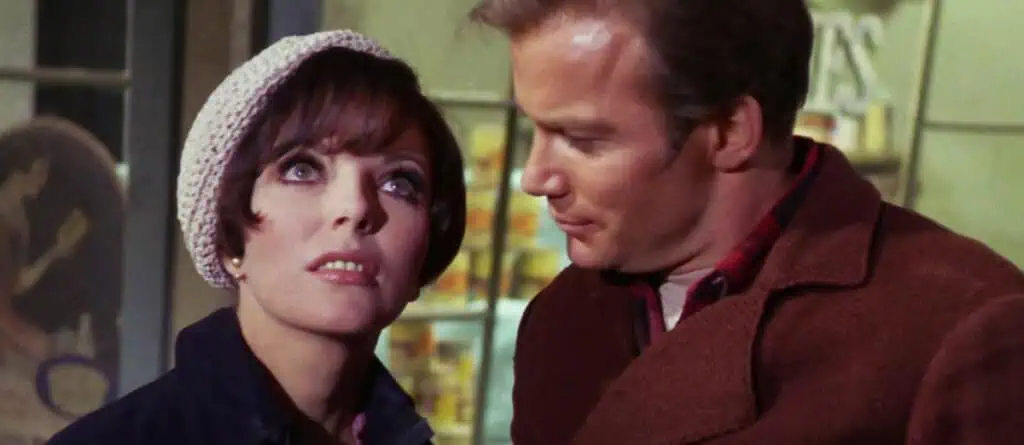
Harlan Ellison’s tragic time-travel story is gripping on its own, but what truly makes the episode unforgettable is the impossible moral choice at its center. Watching Kirk forced to sacrifice his own happiness-and the woman he loves-to save humanity’s future is heartbreaking. Joan Collins is terrific as Edith Keeler, and her natural chemistry with William Shatner gives the story a bittersweet, romantic quality that still hits hard sixty years later. It's a perfect masterpiece of sci-fi drama that proves
TOS
was always at its best when it focused on deeply human stakes.
Balance of Terror
(Season 1, Episode 14)
Following a deadly attack along the Neutral Zone, Kirk matches wits with a mysterious Romulan commander in a tense battle of strategy and survival.
Release Year: 1966
Season / Episode: Season 1, Episode 14
Directed By: Vincent McEveety
Written By: Paul Schneider
Why It’s Essential: Introduces the Romulans while delivering one of Star Trek’s finest tactical cat-and-mouse battles.
Balance of Terror
is essentially a classic submarine thriller set in deep space, and it remains one of the tensest hours of television
The Original Series
ever produced. Beyond introducing the Romulans with a genuine sense of mystery and menace, it gives Kirk his definitive tactical battle as captain, pitting him against a Romulan Commander (played brilliantly by Mark Lenard) who is very much his equal.
The episode is so foundational that
Star Trek: Strange New Worlds
explicitly revisited these events in
A Quality of Mercy
-an alternate-future finale that showed how tragically things would have gone if Captain Pike, rather than Kirk, had been in command. It even lovingly recreated TOS's iconic, moody, dramatic eye-lighting (which never made much tactical sense, but looked incredibly cool).
But what elevates
Balance of Terror
into an absolute masterpiece is the ugly prejudice that bubbles up the moment the crew realizes Romulans look identical to Vulcans. Lieutenant Stiles instantly questions Spock's loyalty, forcing the series to confront the reality that even in a utopian future, humanity still has work to do. It's a brilliant, gritty character wrinkle in an already perfect sci-fi thriller.
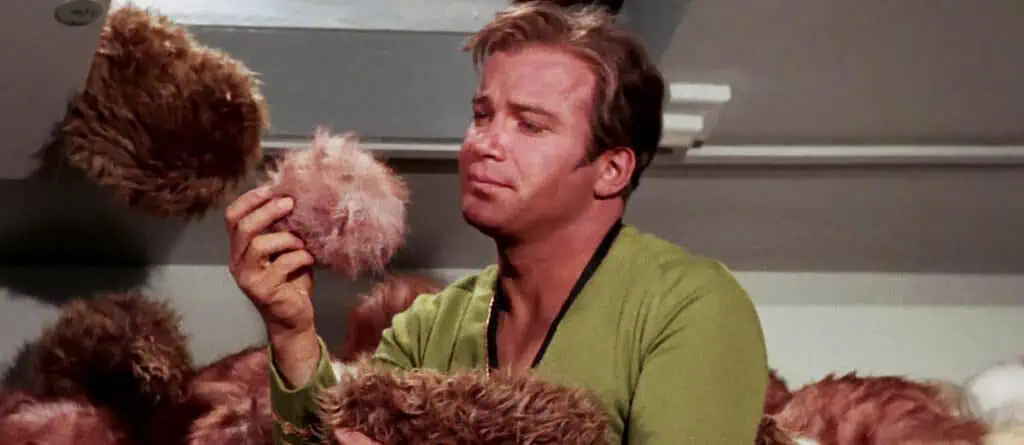
The Trouble with Tribbles
(Season 2, Episode 15)
The Enterprise is overrun by rapidly multiplying furry creatures while tensions rise between Starfleet and the Klingons aboard a busy space station.
Release Year: 1967
Season / Episode: Season 2, Episode 15
Directed By: Joseph Pevney
Written By: David Gerrold
Why It’s Essential: The franchise’s definitive comedy and the debut of one of science fiction’s most recognizable creatures.
The Trouble with Tribbles
proves that
Star Trek
didn't always need heavy philosophy, grim moral dilemmas, or galactic stakes to be brilliant. Easily the show’s most legendary comedy, it features impeccable comic timing and a premise so delightfully silly that it remains utterly irresistible. Plus, the rapidly multiplying, purring furballs themselves became one of the most enduring icons in sci-fi history.
William Shatner's comedic chops shine brightly here, with Kirk growing increasingly, hilariously exasperated as the creatures invade his ship, his food, and eventually rain down upon his head. The absolute highlight of the episode is his baffled interrogation of Scotty after a bar fight with the Klingons. Learning that Scotty sat idly by while the Klingons insulted Kirk, but immediately threw down the moment they badmouthed the
Enterprise
, is a perfect character beat that tells you everything you will ever need to know about the Chief Engineer.
The episode’s legacy is so monumental that
Star Trek: Deep Space Nine
later delivered the ultimate tribute with
Trials and Tribble-ations
, a pitch-perfect, digitally inserted crossover that lovingly celebrated this 1967 classic without ever losing its own unique charm.
Amok Time
(Season 2, Episode 1)
Spock returns to Vulcan to undergo the ancient mating ritual known as Pon Farr, where tradition forces him into a deadly personal conflict.
Release Year: 1967
Season / Episode: Season 2, Episode 1
Directed By: Joseph Pevney
Written By: Theodore Sturgeon
Why It’s Essential: Introduces Pon Farr, explores Vulcan culture, and cements the friendship between Kirk, Spock, and McCoy.
By the end of the first season, Leonard Nimoy's Mr. Spock had become the breakout star of
Star Trek
. Fan mail was pouring in, and viewers were desperate to learn more about the mysterious first officer. It only made sense, then, that the second-season premiere would take a deep dive into Spock’s psychology and the brutal reality of Vulcan culture.
The exploration of the Vulcan mating ritual (
pon farr
) and Spock’s harsh homeworld is, to borrow a catchphrase, fascinating. But what makes
Amok Time
truly essential is how it solidifies the legendary trinity of Kirk, Spock, and McCoy. To save his friend’s life, Kirk risks his entire career by defying Starfleet orders and redirecting the
Enterprise
to Vulcan-only to be forced into a ritual battle to the death against his own first officer.
The climax is driven by Gerald Fried's bombastic fight music, which became one of the most instantly recognizable, heavily parodied scores in television history. (Personally, I can’t hear those dramatic brass hits without picturing Jim Carrey shrieking the tune while swinging a medieval weapon in
The Cable Guy
.)
But the real heart of the episode is its ending: one of Spock's incredibly rare displays of pure, unbridled emotion-minus any alien spores-when he realizes Kirk survived the ordeal. That sudden, beaming smile says more about their timeless friendship than anything else could.
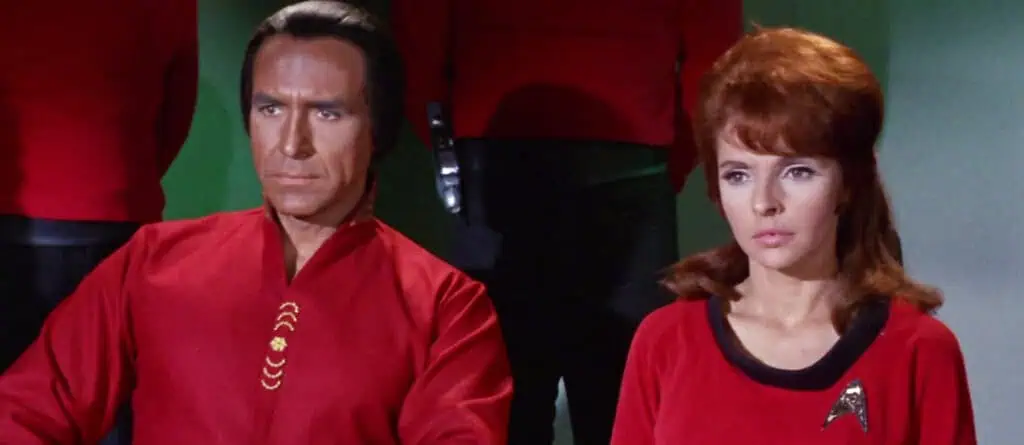
Space Seed
(Season 1, Episode 22)
The crew awakens Khan Noonien Singh, a genetically engineered superhuman from Earth’s past whose ambition soon threatens to seize control of the Enterprise.
Release Year: 1967
Season / Episode: Season 1, Episode 22
Directed By: Marc Daniels
Written By: Carey Wilber
Why It’s Essential: Introduces Khan and lays the groundwork for Star Trek II: The Wrath of Khan.
Space Seed
introduced arguably the greatest adversary in
Star Trek
history. Long before
The Wrath of Khan
cemented him as an all-time cinematic icon, Ricardo Montalbán made Khan Noonien Singh feel terrifyingly brilliant, physically imposing, and intensely seductive. He isn't just a brute-force villain; he is charismatic enough that you completely understand why an army once followed him-and why the
Enterprise
's own historian, Marla McGivers, is so easily pulled into his dangerous orbit.
What makes Khan such a fascinating threat is that he isn’t an alien monster or a cosmic anomaly, but a genetically engineered tyrant from Earth's own dark past. He represents human ambition and perceived superiority taken to their most absolute extremes. The episode allows Kirk to push back against that ideology not just with his flying dropkick, but philosophically, defending the virtues of a mature humanity.
It's an episode that feels massive in hindsight. While
Space Seed
is a deeply suspenseful thriller in its own right, knowing that this specific encounter lays the volatile groundwork for the franchise’s cinematic masterpiece years later gives every single scene an extra layer of legendary weight.
The Devil in the Dark
(Season 1, Episode 25)
The Enterprise investigates a series of deadly attacks at a mining colony, only to discover that the mysterious creature responsible may not be the monster it appears to be.
Release Year: 1967
Season / Episode: Season 1, Episode 25
Directed By: Joseph Pevney
Written By: Gene L. Coon
Why It’s Essential: A classic lesson in empathy that transforms a monster story into one of Star Trek’s defining moral adventures.
The Devil in the Dark
could have easily been a cheap, straightforward monster-of-the-week creature feature. Instead, it becomes a beautiful story about communication, empathy, and the lethal danger of assuming that anything unfamiliar must be hostile.
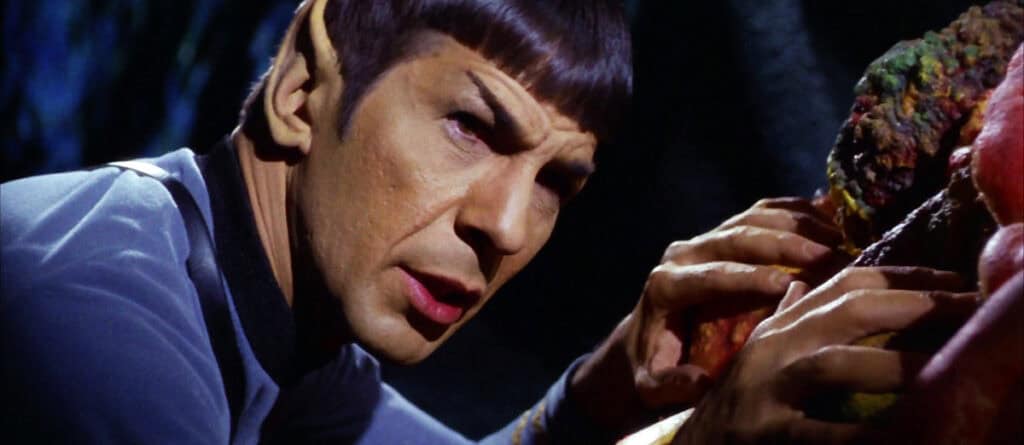
Spock's mind meld with the Horta is one of the most memorable sequences in television history. Sure, the sight of Leonard Nimoy crying out in genuine agony while psychically bonding with a creature that looks like a shag rug covered in melted crayons should be ridiculous-and, honestly, it kind of is-but the emotional sincerity of the actors makes it work beautifully.
The episode also gives DeForest Kelley some of his finest material. Forced to treat a silicon-based alien with standard medical gear, McCoy delivers one of his most iconic classic catchphrase variations:
“I’m a doctor, not a bricklayer!”
But what really makes the story endure is its timeless message: the unknown doesn't always need to be feared or destroyed. Sometimes, it just needs to be understood.
Mirror, Mirror
(Season 2, Episode 4)
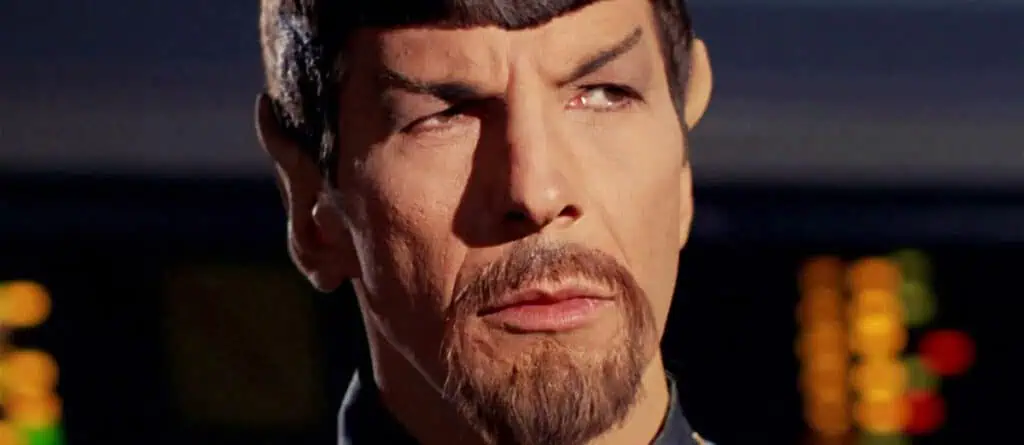
A transporter accident sends Kirk and several crew members into a parallel universe where the ruthless Terran Empire rules by violence and fear… and Spock has a goatee.
Release Year: 1967
Season / Episode: Season 2, Episode 4
Directed By: Marc Daniels
Written By: Jerome Bixby
Why It’s Essential: Debuts the Mirror Universe, a concept that became one of Star Trek’s most enduring recurring settings.
The concept of a brutal alternate reality where the
Enterprise
serves a ruthless, conquering “Terran Empire” is instantly unforgettable. The midriff-baring uniforms, the casual assassinations for career advancement, and, of course, Evil Spock's iconic goatee all help make this dark reflection of the
Star Trek
universe feel delightfully pulpy and dangerous.
But what elevates
Mirror, Mirror
is that it isn't just a simple “what if everyone was evil?” exercise. The real suspense comes from watching Kirk, McCoy, Scotty, and Uhura desperately navigate this twisted society without blowing their cover. It also gives the cast a chance to play slightly warped versions of themselves-particularly Leonard Nimoy, whose Mirror Spock is colder and more calculating, yet still possesses a logic that Kirk can ultimately reason with. (While it would have been fun to see more of the tyrannical Mirror Kirk, we did at least get to see William Shatner “break bad” a season earlier in
The Enemy Within
.)
When Kirk finally finds a way home, he doesn't just run for the exit; he pauses to challenge Mirror Spock, pointing out that the Empire’s cruelty is mathematically unsustainable. That philosophical parting shot helped to lay the groundwork for future returns to the Mirror Universe in
Deep Space Nine
,
Enterprise
, and
Discovery
.
Journey to Babel
(Season 2, Episode 10)
While transporting delegates to a crucial peace conference, the Enterprise becomes the scene of a murder investigation and a growing diplomatic crisis.
Release Year: 1967
Season / Episode: Season 2, Episode 10
Directed By: Joseph Pevney
Written By: D. C. Fontana
Why It’s Essential: Introduces Spock’s parents while greatly expanding the political and cultural scope of the Federation.
Journey to Babel holds a special place in my heart because it was the very first episode of
The Original Series
I ever saw. I actually bought it on VHS when I was a kid after saving up the $30 it cost-which is a completely ridiculous price for a single episode by today’s standards-so needless to say, I watched this tape until it practically wore out.
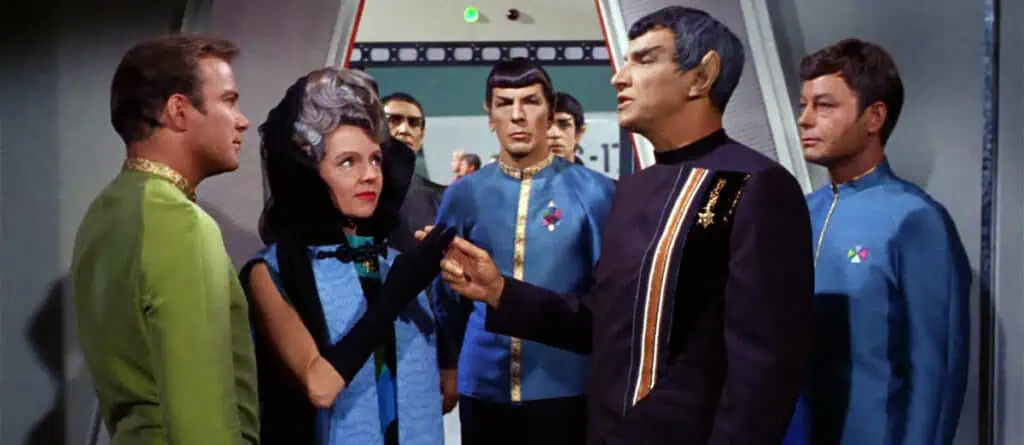
Personal nostalgia aside, this is easily one of the greatest world-building episodes in the entire franchise. It introduces Spock's parents, the stoic Vulcan ambassador Sarek (Mark Lenard, returning in a brilliant new role) and his human mother, Amanda. Their arrival adds new layers to our favourite First Officer, exposing the friction between his Vulcan and human sides. The episode also broadens the scope of the
Star Trek
universe by giving us our first real look at Federation politics, filling the corridors with diverse alien delegates, including debuts for the Andorians and Tellarites.
It's part family drama, part political thriller, and part murder mystery, but it all works because the episode keeps coming back to Spock. Seeing him caught between his duty to his ship, his loyalty to his father, and the emotional pull of his mother gives the character real texture and helps make
Journey to Babel
one of the most important Spock episodes in the entire series, as well as one of my personal favourites.
The Doomsday Machine
(Season 2, Episode 6)
The Enterprise encounters a massive, planet-destroying weapon carving a path of destruction across the galaxy, forcing Kirk to find a way to stop it.
Release Year: 1967
Season / Episode: Season 2, Episode 6
Directed By: Marc Daniels
Written By: Norman Spinrad
Why It’s Essential: A gripping action-thriller driven by an unforgettable guest performance and one of the series’ greatest space battles.
Boasting an apocalyptic threat, battered starships, and a powerhouse guest performance by William Windom,
The Doomsday Machine
is one of the greatest action-thrillers
The Original Series
ever delivered. It’s essentially
Moby-Dick
in deep space-only instead of a white whale, our Ahab is hunting a giant, automated, planet-killing space cone. Yes, the prop looks a bit like an over-baked papier-mâché windsock, but the sheer terror it inspires is completely genuine.
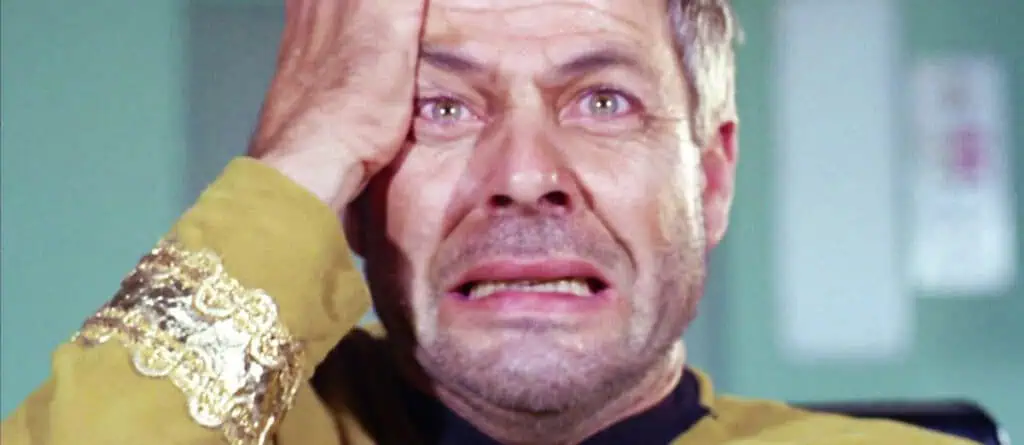
Windom gives the story its tragic, beating heart. As Commodore Matt Decker, he’s a broken man consumed by survivor’s guilt after losing his entire crew, turning his obsession toward destroying the machine at any cost. This setup creates incredible tension when Decker uses his superior rank to commandeer the
Enterprise
from a deeply resistant Spock, launching a suicidal frontal assault.
The titular planet-killer is a beautifully simple threat: mysterious, unstoppable, and completely indifferent to life. Combined with Kirk's desperate race to regain control of his ship and Sol Kaplan's driving, cinematic musical score,
The Doomsday Machine
remains one of the show’s most intense and purely entertaining episodes.
A Taste of Armageddon
(Season 1, Episode 23)
The Enterprise visits a planet where two civilizations wage war through computer simulations, with the designated casualties willingly reporting for execution.
Release Year: 1967
Season / Episode: Season 1, Episode 23
Directed By: Joseph Pevney
Written By: Robert Hamner
Why It’s Essential: One of Star Trek’s sharpest anti-war stories, examining the dangers of sanitizing conflict through technology.
Sure,
A Taste of Armageddon
may not be one of the first episodes mentioned when people talk about the very best of
The Original Series
, but as a piece of classic
Star Trek
social commentary, it’s fantastic.
The premise is chillingly simple: two planets have been at war for centuries, but instead of actually launching attacks, they run the conflict through computers and then require the "casualties" to report to disintegration chambers. War has become clean, orderly, and bureaucratic, with all the horror stripped away so the societies can continue functioning as if mass death is just another civic responsibility.
It takes the idea of sanitized warfare to a disturbing extreme, and Kirk's response is one of his best
TOS
speeches. He fundamentally rejects the twisted logic of a society that has made murder efficient, painless, and permanent. In a bold, incredibly risky move, Kirk forces both worlds to confront the visceral reality of actual violence. “
I think you’ll find that they’re just as terrified, appalled, horrified as you are, that they’ll do anything to avoid the alternative I’ve given you,
” he says. “
Peace or utter destruction. It’s up to you.
“
It might not be the flashiest episode on this list, but it's a great example of
Star Trek
using a big concept to say something genuinely uncomfortable.
Frequently Asked Questions
What is the best episode of
Star Trek: The Original Series
?
Many fans and critics consider
The City on the Edge of Forever
to be the greatest episode of
Star Trek: The Original Series
. Written from a story by Harlan Ellison, it combines time travel, romance, and one of William Shatner’s most emotional performances as Captain James T. Kirk.
Which
Star Trek
episode introduces Khan?
Space Seed
marks the first appearance of Khan Noonien Singh, played by Ricardo Montalbán. The episode later served as the foundation for Star Trek II: The Wrath of Khan.
Which episode introduces the Mirror Universe?
Mirror, Mirror
is the first episode to feature the Mirror Universe, an alternate reality ruled by the brutal Terran Empire. The concept later became one of the franchise’s most popular recurring storylines.
Which episode introduces the Romulans?
Balance of Terror
is the Romulans’ first appearance in
Star Trek
. The episode also establishes the Neutral Zone and remains one of the franchise’s greatest tactical space battles.
Which episode explains pon farr?
Amok Time
introduces pon farr, the Vulcan mating cycle, while also giving audiences their first visit to Vulcan and expanding the mythology surrounding Mr. Spock.
Which
Star Trek: The Original Series
episodes are the funniest?
The Trouble with Tribbles
is widely regarded as the funniest episode of the series thanks to its lovable Tribbles, escalating chaos aboard the Enterprise, and the cast’s outstanding comic performances.
How many episodes are in
Star Trek: The Original Series
?
Star Trek: The Original Series
aired from 1966 to 1969 and consisted of 79 episodes (or 80 if you count
The Cage
) across three seasons.
To Boldy Go…
Obviously, narrowing
The Original Series
down to just ten episodes means leaving some classics behind. Believe me, I agonized over this one, and I’m still filled with regret. A few honourable mentions include
The Tholian Web, Arena, The Corbomite Maneuver, Errand of Mercy, The Enterprise Incident, The Enemy Within
, and
A Piece of the Action
.
So what would make your list? Set a course for the comments and let me know
your
top ten episodes of
Star Trek: The Original Series
.
The post
Star Trek Turns 60: We Pick the 10 Best Original Series Episodes!
appeared first on
JoBlo
.
Gene Roddenberry’s vision of a utopian future and universe exploration has been going strong for 60 years, telling a vast amount of sci-fi stories on diplomacy and ethics.
Star Trek
is celebrating its 60th anniversary with
re-releases
of some of the original films, paired with classic episodes featuring William Shatner, Leonard Nimoy and DeForest Kelley. Fans will also participate in an attempt at a world record display of the
Vulcan salute
.
Vice Press
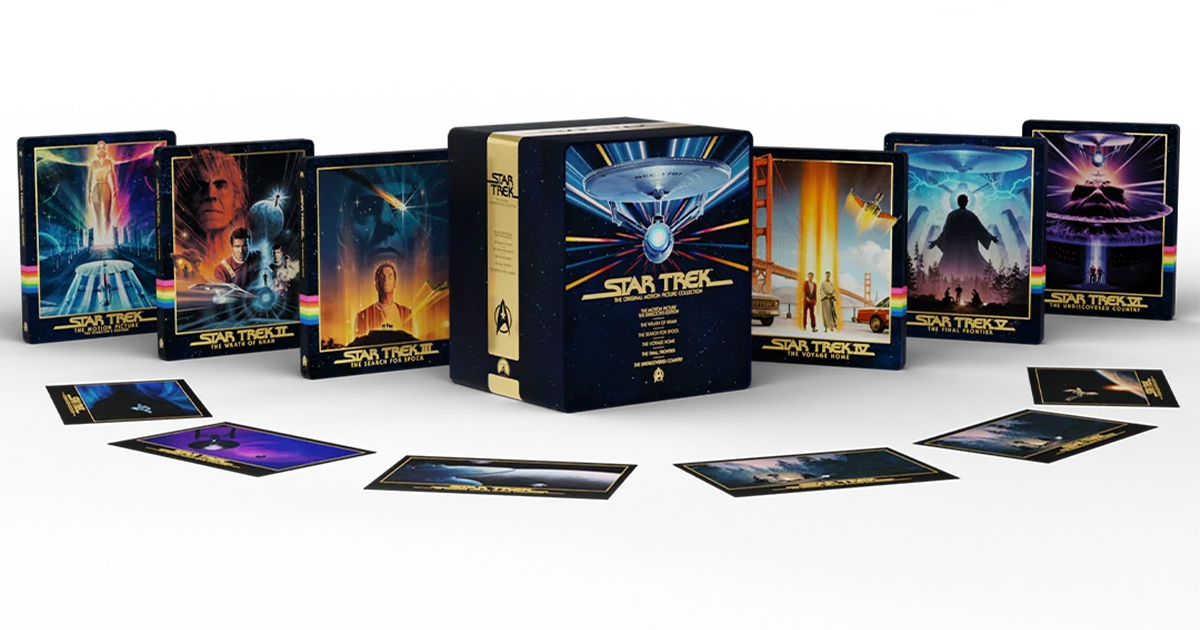
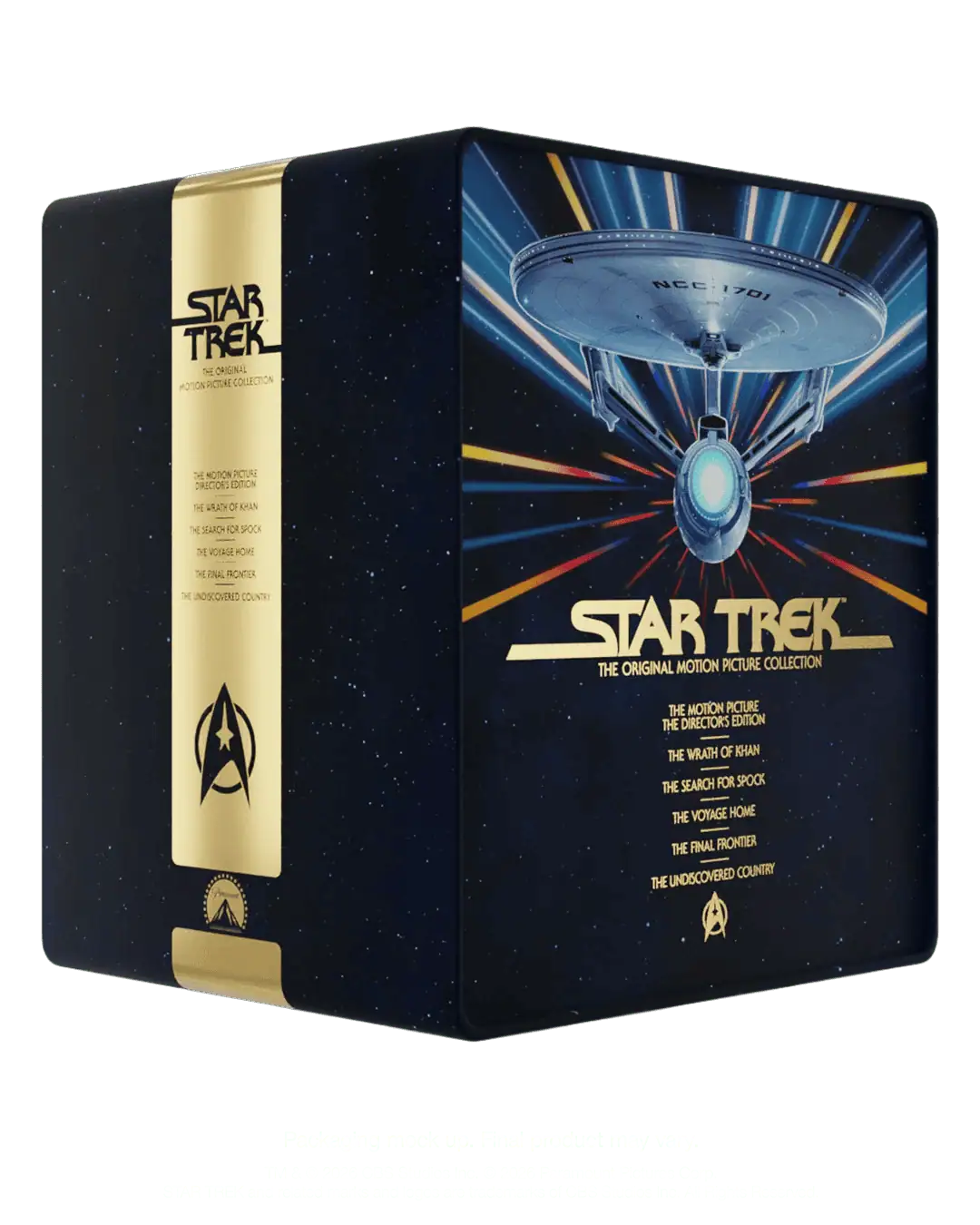
is also announcing details on the release of a new 4K Blu-ray Collection Case from Paramount Home Entertainment, which includes the first six films with the original cast —
Star Trek: The Motion Picture
(1979) to
Star Trek VI: The Undiscovered Country
(1991).
Star Trek: The Original Motion Picture Library Case
The product descriptions read:
The Star Trek: The Original Motion Picture Collection Library Case (1-6) includes 6 SteelBooks and 6 artcards. Art and design by Matt Ferguson.
STAR TREK: THE MOTION PICTURE – DIRECTOR’S EDITION
The adventure begins when an unidentified alien intruder destroys three powerful Klingon cruisers. Captain James T. Kirk boldly returns to the helm of a newly transformed U.S.S. Enterprise to take command. This bold adventure launched one of the longest running movie franchises of all time and features the cast of the original STAR TREK series, including William Shatner, Leonard Nimoy, DeForest Kelley, George Takei, Nichelle Nichols, Walter Koenig, and James Doohan
STAR TREK II: THE WRATH OF KHAN – THEATRICAL AND DIRECTOR’S CUT
On routine training manoeuvres, Admiral James T. Kirk seems resigned that this may be the last space mission of his career. But an adversary from the past has returned with a vengeance. Aided by his exiled band of genetic supermen, Khan (Ricardo Montalban)-brilliant renegade of 20th century Earth-has raided Space Station Regula One, stolen the top-secret device called Project Genesis, wrested control of another Federation starship, and now schemes to set a most deadly trap for his old enemy Kirk...with the threat of a universal Armageddon.
STAR TREK III: THE SEARCH FOR SPOCK:
Picking up immediately after STAR TREK II, Admiral Kirk finds the defeat of Khan and the creation of the Genesis planet to be empty victories. Spock is dead and McCoy is inexplicably being driven insane. Then a visit from Spock's father provides a startling revelation: McCoy is harboring Spock's living essence. Kirk attempts to steal the U.S.S. Enterprise and defy Starfleet's Genesis planet quarantine to search for his friend, but the Klingons are planning a deadly rendezvous.
STAR TREK IV: THE VOYAGE HOME:
When a mysterious alien power threatens the atmosphere of Earth in the 23rd Century, Kirk and his crew must time travel back to 1986 San Francisco to save mankind. Exploring this strange new world, they encounter punk rock, pizza and exact-change buses that are as alien as anything in the far reaches of the galaxy. STAR TREK IV: THE VOYAGE HOME is a thrilling, action-packed, and often hysterical fan favourite.
STAR TREK V: THE FINAL FRONTIER:
The crew of the Federation starship Enterprise is summoned to Nimbus III to negotiate a kidnapping from a renegade Vulcan, who turns out to be a relative of Spock. Soon, they're set on a course for the center of the galaxy, exploring his obsessive search for a mysterious planet that could quite possibly be the source of all life.
STAR TREK VI: THE UNDISCOVERED COUNTRY:
After years of war, the Federation and the Klingon empire find themselves on the brink of a peace summit. Before negotiations even begin, a Klingon ship is nearly destroyed, and the apparent attack may be from the Enterprise. Now, the crew must brace for what may be their deadliest encounter. Both the original theatrical cut and the Director's cut are included, alongside an array of special features.
The product details read:
Celebrate the 60th anniversary of Star Trek with Star Trek: The Original Motion Picture Collection Library Case, featuring art by Matt Ferguson!
The Star Trek: The Original Motion Picture Collection Library Case (1-6) includes 6 SteelBooks and 6 artcards. Art and design by Matt Ferguson.
PRODUCT TYPE:
Special Edition 4K + Blu-ray Box Set
EDITION:
The number of copies signed by Matt Ferguson will be limited to 60.
PLOT:
In a small South Korean village near the DMZ, strange cattle mutilations convince the police chief, Bum-seok (Hwang Jung-min), and a hunter, Sung-ki (Zo In-sung), that a wild, dangerous animal might be running loose. The truth is far more outrageous, and potentially apocalyptic, than they can imagine.
REVIEW:
Hope
was pretty much the last kind of thing I expected to see at Cannes back in May- at least as part of the official selection. Typically rather highbrow,
Hope
, which comes from Korean auteur Na Hong-jin, the man behind
The Chaser
and
The Wailing
, rocked the Croisette. It’s is an outstanding piece of action cinema. A sci-fi/action/horror hybrid that runs 160 minutes, the hyper-kinetic action sequences and grandiose filmmaking left some critics dazed - at least at first. But, by the time
Hope
roared to an ending that heavily implies a sequel is on its way, the Cannes critics were cheering and applauding, with it delivering a kind of visceral thrill no other movie in the competition has really aimed to pull off in the same kind of way.
So, what is
Hope
exactly? It's hard to go too deeply into the plot, as part of the fun is how the various reveals are presented (in my opinion the trailers have already revealed too much), with the scale growing increasingly epic as the film goes on. The whole first hour of the movie is an extended, real-time chase sequence, as Hwang Jung-min's initially clumsy police chief realizes an unkillable giant monster is rampaging through the village, racking up an ever-increasing body count as it destroys buildings and rips citizens limb from limb. For forty whole minutes, you never actually see the creature, and as some critics are already pointing out, the eventual reveal is a bit of a disappointment, as
Hope
has one significant flaw - the CGI just isn't quite up to snuff.
Even if the VFX aren’t perfect, the bravura filmmaking is so dazzling you'll forgive that shortcoming quickly enough. The opening action sequence is outstanding, with Jung-min a terrific hero, in that he's believably terrified (I've always appreciated how South Korean action heroes never feel the need to be stoic), but also reliably kick-ass when push comes to shove. Initially a blustering cop the hunters make fun of behind his back, despite being so scared that he can barely load his shotgun, when it comes down to it he’s exactly the guy you want in charge as he rises to the occasion, even if he constantly admits he’s having an impossible time wrapping his head around what’s actually happening. One of the funniest recurring gags in the movie is how the mostly elderly citizens of this fishing village all seem to be hiding vast armories of weapons, as whenever Bum-seok asks someone where they got one of the (many) machine guns featured in the film, they always dismiss him by saying, "No time to explain." The firepower in the movie is extensive, with the amount of rounds and rockets fired in this likely dwarfing any western action film of recent memory.
Where
Hope
really kicks into high gear is with the arrival of
Squid Game
's Jung Ho-yeon
as Sung-ae, the local rookie, whose intro, with her in slow motion pulling out a grenade launcher to back up Bum-seok, had the audience cheering. Her and Jung-min turn out to be a potent buddy movie pairing. By the time this sequence played out, I truly had no idea where
Hope
was going to go, but after about a half hour of downtime that attempts to explain (kind of) what the monsters are, as their bodies are examined, we dive into another massive forty-minute action sequence that manages to outdo the first one.
The whole final third of the movie follows Zo In-sung's Sung-ki, as he and his fellow hunters find the source of the monsters, leading to a slaughter and an extended chase where he tries to escape, while Bum-seok and Sung-ae, with a couple of locals along for the ride, try to come to the rescue. The final stretch, which involves a high-speed horse-to-speeding-cop-car transfer done practically, is a masterpiece of action stunt work and choreography, with Zo In-sung such a cool action hero as he blasts away at the pursuing monsters with a machine gun that Sung-ae literally tells him he looks like a movie star and that she wants to date him. The comedy mixed with the action strikes the kind of balance a guy like Michael Bay has always aimed for but never quite managed, where instead of diffusing the tension, the comedy adds to it because it's character-based.
It's all complemented by an incredible, pounding score by Michael Abels, who also scored Jordan Peele's
Nope
, to which this has a few thematic similarities. And, I haven't even gotten into the fact that Michael Fassbender and Alicia Vikander have prominent roles - but I'm not going to reveal how they figure into the plot here. Many critics are, but to me that spoils too much of the movie.
It's interesting to see how
Hope
is already polarizing critics. Some can't see past the dodgy CGI or the admittedly lengthy running time, but just as many are praising it as one of the most brilliantly executed action films in recent memory, with the Croisette having not seen this much carnage since
Fury Road
. It's one of a kind, and a total blast that will no doubt become an instant classic as far as South Korean cult cinema goes. But, in this era where Korean pop culture is gaining a major foothold in North America, it’s nice to see Neon is giving this a wide, blockbuster-style release, as no summer summer action film out of the States this year delivered the same kind of thrills.
Hope
opens in theaters this Wednesday.
This is the kind of summer that Vin Diesel and Nicole Kidman were preaching about in their AMC promos as audiences had flocked back to theaters now more than ever since the pandemic. Not only has the box office season of summer 2026 become the best since the bleak reality of COVID’s effect on the industry, but
Variety
is reporting that the domestic ticket sales from May 1 through Labor Day on September 7 have become the all-time highest-grossing with $4.76 billion.
The former record went to the summer of 2013, which grossed $4.755 billion at the box office with movies like
Iron Man 3
,
Man of Steel
,
Fast & Furious 6
,
Despicable Me 2
,
Monsters University
and
Star Trek Into Darkness
.
However, two major caveats have also contributed to this feat — the total for ticket sales from over a decade ago had not been adjusted for inflation and the summer movie season now lasts a bit longer than before, as it ran 130 days compared to 123 days in 2013. This is reportedly because of Labor Day's placement on the calendar. The premium theater experience has also now become more lucrative since then, with IMAX, Screen X, Dolby and 4DX theaters increasing options for viewing.
class="wp-block-heading" id="h-money-making-movies">
Money Making Movies
This year saw big crowd-pleasing films that feature multiple that have crossed the billion dollar mark, including
Toy Story 5
,
The Odyssey
and of course,
Spider-Man: Brand New Day
. Add to that the success stories of smaller films like
Obsession
and
Backrooms
, which may have influenced the immediate future of the industry.
Rentrak's head of marketplace trends Paul Dergarabedian, has stated,
“While the summer box office record marks an important turning point for movie theaters, the numbers are only part of the story. What makes this summer uniquely important and potentially pivotal is that, for many people, it may have been the season that reminded them just how much fun it is to go to the movies. That can inspire future moviegoing, create a new generation of theatergoers and, with so many great films still ahead, keep that momentum going."
The post
The Movies Are Back! The 2026 Summer Box Office Breaks an All-Time Record
appeared first on
JoBlo
.
Few filmmakers have fought studios over the final cut of their movies as often as Ridley Scott. Over the course of his career, he’s repeatedly returned to films that were compromised by studio mandates or running time restrictions, restoring deleted scenes and, in some cases, completely changing how audiences viewed them.
As I noted in
my review of Ridley’s latest movie
,
The Dog Stars
, it feels like the theatrical cut was compromised, with the third act feeling like it was cut down to the bone. This wouldn’t be unusual, even for a director as big as Scott, as just recently he put out a director’s cut of
Napoleon
that had a whopping forty-eight minutes reinstated.
While not every Ridley Scott Director’s Cut is essential (his
Alien
Director’s Cut remains controversial among fans for introducing changes that don’t entirely fit the mythology established by James Cameron’s
Aliens
), several have transformed good movies into great ones or rescued misunderstood films from undeserved reputations.
Here are the five Ridley Scott Director’s Cuts that are genuinely worth seeking out:
Kingdom of Heaven
(Director’s Cut)
When
Kingdom of Heaven
opened in theaters in 2005, many viewers came away disappointed. Compared to
Gladiator
, it felt rushed, emotionally distant, and strangely incomplete. The criticism wasn’t entirely unfair; the theatrical version sacrificed nearly 45 minutes of material in an effort to create a more commercially friendly runtime.
The Director’s Cut restores those missing 45 minutes, expanding the film from 144 minutes to 189 minutes, and the difference is remarkable. Orlando Bloom’s Balian evolves from a fairly straightforward hero into a fully realized character whose decisions carry genuine emotional weight. Entire political subplots make more sense, supporting characters receive meaningful development, and one of the film’s major sword fights is restored.
Perhaps the biggest surprise is just how naturally everything fits. Rather than feeling bloated, the longer version finally gives the story room to breathe, allowing its themes of faith, leadership, and morality to resonate in ways the theatrical release never managed. Many critics have since re-evaluated
Kingdom of Heaven
, with the Director’s Cut now widely regarded as one of Scott’s finest historical epics. If you’ve only ever seen the theatrical version, you’re missing what many fans consider the real movie.
Blade Runner
(Director’s Cut / Final Cut)
Few Director’s Cuts have had as much influence as
Blade Runner
. Unlike some of Scott’s later revisions, the improvements aren’t about adding huge amounts of footage. Instead, they’re about removing the compromises forced onto the original theatrical release. Gone is Harrison Ford’s studio-mandated narration, along with the optimistic ending that clashed with the film’s bleak, noir-inspired atmosphere.
Those changes fundamentally alter the experience. Without the narration explaining every emotion and plot point, audiences are left to absorb the haunting world of Los Angeles in 2019 for themselves. The film also restores the mystery surrounding Deckard’s true identity, encouraging decades of debate over whether he’s actually human or a replicant.
Blade Runner
now exists in several different versions, but Scott considers
The Final Cut
to be his definitive edition. It’s the version that cemented the film’s reputation as one of the greatest science fiction movies ever made, transforming what was once viewed as a commercial disappointment into a genuine cinematic landmark.
Legend (Director’s Cut)
Few Ridley Scott films changed as dramatically between versions as
Legend
. The theatrical release that American audiences saw in 1986 was shorter, faster-paced, and featured an electronic score by Tangerine Dream after Universal decided Jerry Goldsmith’s orchestral soundtrack wasn’t commercial enough. Scott’s Director’s Cut restores approximately 30 minutes of footage while reinstating Goldsmith’s magnificent original score, creating a fantasy that feels dreamlike, romantic, and far closer to Scott’s original vision.
That said, this is one entry where opinions remain divided. Some fans still prefer the theatrical version’s brisk pacing and Tangerine Dream soundtrack, both of which have developed devoted followings over the years.
Even so, if you’re interested in seeing
Legend
as Scott intended, the Director’s Cut is essential.
American Gangster (Extended Edition)
When
American Gangster
was released in 2007, it earned strong reviews and became a box office success, but some viewers felt the film moved through its final act a little too quickly. Scott’s Extended Edition restores 19 minutes of deleted material, most notably an expanded epilogue that gives Denzel Washington’s Frank Lucas and Russell Crowe’s Richie Roberts a more satisfying final scene together.
The additional footage deepens the relationship between the two men, showing how years of conflict gradually evolve into mutual respect. Rather than ending abruptly, the film closes on a quieter, more reflective note that feels earned after everything the characters have endured.
The changes aren’t as dramatic as
Kingdom of Heaven
or
Legend
, but they provide a stronger emotional payoff and make an already excellent crime drama even more satisfying.
The Counselor (Extended Cut)
When
The Counselor
premiered in 2013, audiences didn’t quite know what to make of it. Ridley Scott directing an original screenplay by Cormac McCarthy sounded like a dream collaboration, yet the film’s philosophical dialogue, shocking violence, and deliberately cold tone divided critics and moviegoers alike.
The Extended Cut restores roughly 20 minutes of footage, and it embraces everything that made the film so polarizing. The conversations become longer, the themes become richer, and McCarthy’s fascination with fate, greed, and inevitable consequences becomes even more pronounced.
This won’t suddenly convert people who disliked the theatrical version. If anything, it’s an even more uncompromising experience. But for viewers who appreciate McCarthy’s writing or enjoy the film’s bleak worldview, the Extended Cut feels like the complete version Scott originally intended.
Which Ridley Scott Director’s Cut Is the Best?
Ridley Scott has released more Director’s Cuts than almost any major filmmaker, but these five stand apart because they don’t simply restore deleted scenes, they fundamentally improve the movies themselves.
Whether it’s
Kingdom of Heaven
finally becoming the historical epic it always promised to be,
Blade Runner
evolving into a science fiction masterpiece, or
American Gangster
gaining a more satisfying emotional conclusion, these alternate versions demonstrate why Scott remains the filmmaker most closely associated with the idea that a Director’s Cut can truly become the definitive cut.
Which Ridley Scott Director’s Cut is your favorite? Let us know in the comments!
The post
The 5 Best Ridley Scott Director’s Cuts (And Why They’re Better Than the Original Movies)
appeared first on
JoBlo
.
The weekend box office numbers are coming in, and
just as we predicted
,
Spider-Man: Brand New Day
is on top for a sixth straight weekend with $23.5 million over the 4-day weekend. That's only a 20% decrease from last weekend, with its total now at $923 million domestically. It now seems certain to beat
Star Wars: The Force Awakens'
$936 million haul and should officially become the highest-grossing movie of all time domestically within a week. Could it hit a billion dollars? It definitely seems possible, doesn't it? Internationally, it's at a huge $2.4 billion. That said, it won't become the top worldwide movie, with
Avatar
still the champ with $2.9 billion, followed by
Avengers: Endgame
with $2.7 billion.
The Odyssey continues its incredible run
Christopher Nolan's
The Odyssey
hit second place this weekend, only dipping 9% from last weekend to earn $17.3 million over the holiday. Its staying power over the course of the summer has been incredible, thanks in large part to its IMAX release, with theatres extending its run, especially on the 70mm screens it's been exclusive on. It's now made $589 million domestically.
Coyote vs. Acme holds strong
Coyote vs. Acme
had a great hold this weekend, dipping 29% in week two to $15.8 million and a $38.3 million total. While not exactly blockbuster numbers, considering its history and the fact that Ketchup Entertainment has had to go the grassroots route, it's turned into a nice little sleeper hit.
By Any Means takes fourth place
Paramount's
By Any Means
, which stars Mark Wahlberg as Mafia hitman Gregory Scarpa, managed to take fourth place. It made $7.4 million over the weekend ($9.3 million including Labor Day), which is a pretty weak opening, although the film didn't receive the reviews it needed to prop it up at the box office. Fifth place went to
Insidious: Out of the Further
, which made another $8.1 million this weekend for a strong $55.6 million haul. It edged out Pixar's 20th anniversary re-release of
Cars
, which made a solid $7.8 million.
Buddy continues to surprise
Roadside Attractions has a legit cult hit on its hands with
Buddy
. A kind of riff on
Barney & Friends
(were he a killer), the film actually added 3% this weekend for a $7.3 million gross and a strong $15.8 million total. It joins
Obsession
and
Backrooms
as a real outside-the-box horror hit this summer, with it outgrossing a lot of bigger-budget genre fare.
Onslaught and Fall 2 miss the top 10
Case in point:
Onslaught
and
Fall 2: Deadpoint
, neither of which landed in the top 10 this weekend.
Onslaught
made a disastrous $1.8 million, with it earning a terrible C CinemaScore rating.
Fall 2
performed marginally better with $2.3 million. Again, though, not enough to land in the top 10.
Holdovers round out the chart
Instead, the rest of the list was dedicated to holdovers.
PAW Patrol: The Dino Movie
made $4.4 million for a $49.6 million domestic total.
The End of Oak Street
, which has become one of the bigger bombs of the summer, made $4 million for a weak $51.7 million total.
The top 10 was rounded out by Ridley Scott's
The Dog Stars
, which has been a major flop, with it adding only $3.5 million to its really bad $13.8 million domestic total - ouch.
Can Practical Magic 2 work its magic next weekend?
Beloved filmmaker
Danny Boyle
is suddenly playing with fire while promoting his new film,
Ink
, after confirming his movie about the launch of
The Sun
newspaper uses AI. How egregious are we talking? Let’s find out.
30 Seconds of Controversy
In an interview with
Vanity Fair
, Boyle says he used about 30 seconds of generative AI to make his new movie.
Ink
recently opened at the
Venice Film Festival
before screening at
Telluride
. Before we light the torches, let’s hear what Boyle had to say about applying generative AI to his new film:
“There’s about 30 seconds of it in our movie where we animate a couple of old photographs,”
Boyle confessed.
“Oh, and there’s some mice,”
he added.
“It’s very good for animals, and we had some mice that run around
The Sun
newsroom.”
Reanimating the Past (and Some Mice)
While 30 seconds doesn’t seem like a long time, and mice scurrying around an office is hardly a focal point of the film, are these instances enough to enrage keyboard warriors and fans? The short answer is yes. Because the internet is a hellscape of our own making, people are already flocking to social media to rake Boyle over the coals for using AI to reanimate old images of the Kray brothers and former UK Prime Minister Margaret Thatcher.
What Is
Ink
Actually About?
Set in 1969,
Ink
focuses on a rising media tycoon, Rupert Murdoch (Guy Pearce), who acquires the daily newspaper “The Sun” and, with his partner, editor Larry Lamb (Jack O’Connell), turns it into Britain’s most influential tabloid. Claire Foy also stars.
Is AI the Future of Entertainment?
While on the subject of AI,
Vanity Fair
asked Boyle what he thinks about the technology in general, to which he responded:
“It doesn’t really matter what I think about AI. It matters what 20-year-olds think about it. Is the honest truth. My opinion of it is that it’s a very useful tool in many ways, provided you use it respectfully and provided you pay actors if you’re going to replace them with some kind of AI embodiment.”
Boyle also admits he isn’t interested in angering the PETA (People for the Ethical Treatment of Animals) gods, who, when he was making
28 Days Later
, gave him guff for using real chimpanzees in his film. He’s tried his damndest not to use real animals in filmmaking since incurring their wrath.
Slippery Slope or Much Ado About Nothing?
Is this too much fuss for 30 seconds worth of AI? Or, is Danny Boyle walking too close to the slippery slope? AI is an incredibly hot-button topic right now and will likely remain so for years to come, as CEOs and tech bros continue to present it as the future of entertainment. Are you bummed to hear that Danny Boyle’s been bitten by the AI bug? Let us know in the comments section below.
"It's very good for animals."
'Ink' director Danny Boyle shares his thoughts about the use of AI in film.
While the Primetime Emmy Awards aren't for another week, over the weekend, the Creative Arts Emmy Awards were handed out over two consecutive nights. One of the most heartfelt wins went to
the late Rob Reiner
, who won for Guest Actor in a Comedy Series for season four of
The Bear
. On the show, he played Albert Schnurr, a business consultant who mentors line cook Ebraheim (Edwin Lee Gibson) as he tries to expand the titular restaurant's business.
Other winners included Betty Gilpin, who won a much-deserved Emmy for her amazing guest-starring role on
Widow's Bay
as Sarah Westcott Warren in the terrific one-off episode "Our History," which was directed by Ti West. Another long-overdue Emmy went to Linda Cardellini for her role on
DTF St. Louis
. Somehow, she's never won an Emmy in a career that has included
Freaks and Geeks
, a long stint on
ER
, and
Dead to Me
. David Harbour also won for
DTF St. Louis
.
Journeyman actor Ernest Harden Jr., who's been acting for fifty years, also took home an award for Guest Actor in a Drama Series for
The Pitt
, while Shailene Woodley won the corresponding award in the actress category for
Paradise
.
Here are the winners:
Guest Actor in a Comedy Series
- Rob Reiner,
The Bear
Guest Actress in a Comedy Series
- Betty Gilpin,
Widow's Bay
Guest Actor in a Drama Series
- Ernest Harden Jr.,
The Pitt
Guest Actress in a Drama Series
- Shailene Woodley,
Paradise
Supporting Actor in a Limited/Anthology Series or Movie
- David Harbour,
DTF St. Louis
Supporting Actress in a Limited/Anthology Series or Movie
- Linda Cardellini,
DTF St. Louis
Television Movie
-
Remarkably Bright Creatures
Animated Program
-
South Park
Variety Special (Live)
-
The Apple Music Super Bowl LX Halftime Show Starring Bad Bunny
Variety Special (Pre-Recorded)
-
The Muppet Show
Reality/Competition Host
- Alan Cumming,
The Traitors
Game Show
-
Jeopardy!
The post
Rob Reiner wins a posthumous Emmy for The Bear
appeared first on
JoBlo
.
Nearly one month ago, I had the chance to speak with Bruce Campbell. The interview was special because he was talking about the personal and touching new feature,
Ernie & Emma
. Written, directed, and starring Mr. Campbell, it is a personal story for the actor. The film centers on Ernie and his deceased wife. Before her passing, she left her husband instructions on where she’d like him to spread her remains. And this sets the widower on a personal journey. It’s a sweet story, one that feels especially heartbreaking with
Campbell’s recent announcement.
The first time I met Mr. Campbell was at a book signing many years ago. Funnily enough, I’d never interviewed him. However, I had spoken to him at a small handful of events, I felt fortunate to meet this dashing fellow. Mr. Campbell has always been a part of my life. I fell in love with the
Evil Dead
franchise early on. I’d sneak down into the basement at three in the am and re-watch
Evil Dead 2
on the regular. He has created a number of charismatic on-screen personas.
During our interview, Mr. Campbell talked openly about cancer and the trials and tribulations that come with it. It’s a terrific discussion, one that is honest, heartfelt, and engaging. Mr. Campbell is a legend. At the time of the interview, the recent news about his health hadn’t been released. If anything, it brings me hope that
Ernie
and Emma
may help others cope with the loss of a loved one. And it was an honor to sit down with Bruce Campbell for such a thoughtful conversation.
The post
Interview: Bruce Campbell on Ernie & Emma and his legendary career
appeared first on
JoBlo
.
Robert Zemeckis's
Contact
, based on the acclaimed novel by Carl Sagan, was among the most anticipated movies of its time. At last, a realistic, scientifically rigorous movie was being made about first contact.
But the ending, to many, proved to be the ultimate cop-out-albeit not that different from the book. The film hinges on the idea of faith vs. science, but the ending is ambiguous in both regards. More than that, audiences expected to see an alien, only to see-well: Jodie Foster's dead father.
So what about the ending? Is it as bad as all that, or is it actually exactly what Carl Sagan intended, designed to provoke intellectual debate rather than provide your typical Hollywood ending? And why didn't we see an alien?
After all, the movie is directed by the guy behind
Back to the Future
,
Who Framed Roger Rabbit
, and
Forrest Gump
. Weren't audiences deserving of something a little more exciting than, well, Jodie Foster's dead father?
Robert Zemeckis at the Peak of His Career
While somewhat more obscure now than you'd think given the pedigree,
Contact
was one of the most high-profile films of the nineties. If it fell somewhat short of industry expectations, that was only because of the sheer talent involved.
It was directed by Robert Zemeckis, who, at the time, was one of the most bankable directors in Hollywood, rivaling Steven Spielberg. His more recent work has certainly been a mixed bag, but at the time he was on an incredible box office run.
First there was 1984's
Romancing the Stone
, which was followed by
Back to the Future
. That alone made him among the most sought-after directors in town, able to skillfully blend humor, drama, and cutting-edge VFX in what's now thought to be among the greatest films ever made.
He followed it up with another industry disruptor-
Who Framed Roger Rabbit
, which blended live action and animation in a way no one thought possible, becoming another classic. It was quickly followed by his back-to-back
Back to the Future
sequels. And while his follow-up,
Death Becomes Her
, was seen as something of a disappointment financially, it was another movie that pushed boundaries in terms of on-screen VFX.
But nothing really prepared Hollywood for his follow-up,
Forrest Gump
. It not only won him a Best Director Oscar and became a box office behemoth, but it did something no one thought possible at the time: it used cutting-edge technology to make dead historical figures like JFK, John Lennon, and others seem to interact with Tom Hanks' Forrest Gump. While very dated in our era of deepfakes and AI, at the time
Gump
's effects were considered mind-blowing.
When Zemeckis signed on to
Contact
, everyone expected another film that would push the envelope in terms of what technology could bring to the big screen. But while that's maybe what the public or even some studio execs expected, that's not what
Contact
was ever intended to be.
Carl Sagan and the Origins of
Contact
Contact
was based on the novel by Carl Sagan. Sagan was known as perhaps the greatest science communicator of his day. An astronomer and planetary scientist, he had the talent of taking complex scientific theories and breaking them down into language the layman could understand.
The most famous example of this was his passion project
Cosmos: A Personal Voyage
, a thirteen-part miniseries on PBS that covered cosmology and its relation to the origin of human life. It was a sensation throughout the eighties, seen by an estimated 500 million people in sixty countries. Among others, it inspired Neil deGrasse Tyson, who would later host his own version of
Cosmos
in tribute to the man he called his mentor, picking up the torch as the great science communicator of his day following Sagan's death from cancer in 1996-only months before
Contact
came out in theaters.
In addition to his scientific work, Sagan was an author. The book actually began life as a screenplay he co-wrote with his future wife Ann Druyan in 1979. Frustrated with its lack of momentum at the studios, Sagan transformed the script into a novel, which became a bestseller.
While a fictional story, Sagan aimed to make it as scientifically accurate as possible, consulting with physicist Kip Thorne on the concept of "wormholes," which figure prominently in the book. It centers around Eleanor “Ellie” Arroway, an astronomer working for the SETI Institute-short for the Search for Extraterrestrial Intelligence.
The project detects a signal from Vega, 26 light-years away, transmitting prime numbers and later a retransmission of Adolf Hitler’s 1936 Olympic speech, the first TV signal to escape Earth’s ionosphere. Convinced they are on the verge of first contact, Ellie and four other scientists are chosen to travel on a ship that moves through a network of wormholes to make contact, with the alien lifeforms eventually taking the form of a loved one.
Upon their return, they discover that to the humans left behind on Earth, it seems like they never left. No evidence remains of first contact, leading many to disbelieve their story, although Ellie later discovers scientific evidence revealing the trip did indeed happen.
The Long Road to Adaptation
When
Contact
was published as a novel and sold so well, the project-and Sagan and Druyan's script-once again became a hot property in Hollywood, initially optioned by Warner Bros.
At first, Roland Joffé, director of
The Killing Fields
and
The Mission
, was set to direct, with a revised screenplay by James V. Hart, who would later write
Hook
and
Bram Stoker's Dracula
. Eventually, Joffé was replaced by
Mad Max
's George Miller, with Michael Goldenberg brought in to further develop the script.
Miller wanted to cast Uma Thurman as Ellie, with Ralph Fiennes playing Palmer Joss, a Christian philosopher who becomes Ellie's love interest and further inhabits the faith vs. science aspect of the search for extraterrestrial life. Yet Miller and the studio parted ways over his script ideas, and they went to Robert Zemeckis. Thanks to his place in Hollywood following
Forrest Gump
, Zemeckis was given carte blanche to do the movie his way, including final cut privileges and casting. Still, he kept Sagan intimately involved, hoping to make a science-based film that could rival
2001: A Space Odyssey
.
Key Differences Between the Novel and the Movie
Robert Zemeckis
assembled a fine cast, led by Jodie Foster, who was perhaps only second to Julia Roberts at the time as one of the most acclaimed actresses in Hollywood. She was coming off two Oscar wins, first for
The Accused
in 1988, and then for
The Silence of the Lambs
, which was also one of the biggest blockbusters of its time. Her track record at the box office was excellent, having also won acclaim for directing
Little Man Tate
, as well as her foray into comedy starring opposite Mel Gibson in
Maverick
.
The role of Palmer Joss would be taken by Matthew McConaughey, who had skyrocketed to stardom overnight after being cast in the lead of the John Grisham adaptation
A Time to Kill
the year before. When that film was a hit, he became a megastar, and this would be his follow-up.
The supporting cast included James Woods, Tom Skerritt, Angela Bassett, and David Morse, who played an important role as Ellie's deceased father, whose image the aliens take at the end.
The film version of
Contact
would be different from the novel in many ways:
• Five people travel in the novel. Ellie is joined by four international passengers, reflecting the book's emphasis on global cooperation. In the film, Ellie travels alone, making the experience more personal and emotionally direct while keeping Foster as the film's central focus.
• Palmer Joss is less of a romantic lead in the book. The film greatly expands his relationship with Ellie and makes their romance central to the conflict between faith and science. Not only did this appeal to a larger audience-particularly because of McConaughey's heartthrob status-but it gave equal screen time to the faith aspect of the debate, aiming the movie at both a faith-based and secular audience.
• The movie makes Ellie's father central. The alien appears to Ellie in the form of her late father. The novel also uses a familiar human form to communicate with her, but Ellie's childhood grief and relationship with her father are much more prominent in the film.
• The novel is more political and scientific. Sagan spends considerably more time on international negotiations, the construction of the machine, mathematical ideas, and debates between different nations and belief systems. The film turns much of this into a focused Hollywood character drama.
• The endings offer different evidence. In the film, officials suppress the fact that Ellie's recording device captured roughly 18 hours of static, subtly supporting her account. In the novel, Ellie discovers a remarkable pattern hidden deep within the digits of pi: a circle emerging from a seemingly random sequence. This suggests that intelligence-and perhaps design-exists within the structure of the universe itself.
• The book's aliens are more explicit about the larger mystery. They explain that they did not create the transport network and are themselves investigating who built it. The film hints at this ancient cosmic infrastructure but leaves more unexplained.
Why We Didn’t See an Alien
The decision to have the extraterrestrial appear as Ellie's father came from Carl Sagan-not Robert Zemeckis. The same basic encounter occurs in Sagan's novel: the being assumes the appearance of Ellie's deceased father, Ted, because it has accessed her memories and wants to communicate through a form she can understand and trust.
Zemeckis did, however, make that choice feel much more sentimental. Because the movie is called
Contact
, comes from Robert Zemeckis, and was positioned as a summer blockbuster, audiences expected some kind of alien at the end of the film. Instead, they got something more intellectual-but also, in the opinion of many, overly sentimental.
Intellectually and thematically, a conventional alien was never really what Sagan was promising. His reasoning appears to be:
A genuinely advanced extraterrestrial might be so unfamiliar that humans couldn't meaningfully perceive or communicate with it.
Any recognizable creature design-grey alien, insect, humanoid-would be a Hollywood invention.
The aliens are managing humanity's first step into a much larger reality, so they deliberately provide Ellie with a psychologically comprehensible interface.
The movie does give Ellie glimpses of enormous structures and distant civilizations during her journey. What it withholds is the extraterrestrial's true physical form. That distinction matters: she unquestionably contacts another intelligence, but the film refuses to pretend it knows what such an intelligence would look like.
In some ways, this isn't dissimilar to what Denis Villeneuve would later do in his own first contact movie,
Arrival
. Now, you actually see the aliens in
Arrival
, which is important and likely why that film was a success, but it's similar in that the aliens have to find a way to communicate with humanity beyond language-with that movie also playing with how the aliens process time.
Technological Realism and Controversy
While Zemeckis avoided reaching into his VFX bag of tricks for a big-screen alien, in other ways the film was indeed cutting-edge.
Footage of then-President Bill Clinton was manipulated to make it look like he was addressing first contact, allowing the film to establish him as the president rather than cast an actor. This proved controversial, with the White House Counsel sending a strongly worded letter to the studio protesting the use of Clinton in the film. Warner Bros. defended it by saying the White House was notified early on and even sent a print of the film before release, even if they never specifically sought permission.
The movie also starts with a three-minute CGI sequence depicting the vastness of the universe which, at the time, was the longest continuous CGI shot in a live-action film.
Also worth noting is Zemeckis' devotion to making the film look like it takes place in the contemporary world, using clips from
Crossfire
,
Larry King Live
, and
The Tonight Show with Jay Leno
. Like with Clinton, the use of several CNN correspondents proved controversial. Because Time Warner owned CNN, it gave the impression that the news channel was being manipulated by its parent company. In the future, anytime CNN was approached for use in a film, it had to go through an ethics committee.
Box Office, Reception, and Legacy
In the end,
Contact
's reaction was mixed-both critically and with audiences. Many critics liked it, and audiences gave it an A-minus CinemaScore rating, which was good, but not high enough to suggest audiences loved the movie unreservedly.
It was seen as something of a box office failure when it failed to take the top spot the weekend it came out, making just over $20 million. That was a record for star Jodie Foster, but not strong enough to beat out the movie that won that weekend-ironically,
Men in Black
, which featured a whole whack of aliens and appealed directly to the blockbuster audience
Contact
missed out on.
Contact
ended up having legs at the box office and just passed $100 million domestically. Given the high $70 million budget, it lost money in theaters, though it made up for the shortfall overseas, on home video, and on cable. It became an early DVD hit but was shut out at the Academy Awards, receiving only a single nomination for Best Sound. This was likely seen as a bitter disappointment for a movie directed by Zemeckis.
Zemeckis quickly bounced back in the year 2000 with two major hits: the Harrison Ford and Michelle Pfeiffer-led
What Lies Beneath
, and the Tom Hanks-led
Cast Away
. Yet Zemeckis would later embark on a controversial chapter of his career based on his interest in pushing what was possible on screen, pioneering motion capture technology in
The Polar Express
,
Beowulf
, and
A Christmas Carol
through his company ImageMovers. The last two saw mixed results at the box office, while the ImageMovers production
Mars Needs Moms
was a total disaster.
He'd do one more great live-action movie-the Denzel Washington-led
Flight
-but his follow-up movies were all received poorly, both critically and financially.
Allied
was a disappointment,
Welcome to Marwen
was a disaster, while
The Witches
and
Pinocchio
went straight to streaming. His film
Here
once again tried to push boundaries in terms of VFX, but failed financially.
Looking at Zemeckis' career as a whole, one needs to give him some praise for his work on
Contact
. By not showing an alien at the end, he actually showed restraint.
Zemeckis, due to his love of tech, could have easily given us a giant CGI alien. But it would have gone against Carl Sagan's original concept. While Zemeckis changed some aspects of the book, he opted to remain faithful to Sagan's core intentions, giving the film the feeling of something the late Sagan would have been proud of.
It wasn't financially all that successful, but it's well regarded nearly thirty years later-and certainly a movie everyone involved can hold their heads up high while talking about.
The post
Nearly 30 Years Later, Robert Zemeckis's Most Misunderstood Sci-Fi Epic Deserves a Reevaluation
appeared first on
JoBlo
.
What happens when a franchise that has been relegated to the straight-to-video dumpster gets a lifeline from one of the hottest writers in Hollywood? In 1994, just one week after Quentin Tarantino walked away from the Oscars with an Academy Award for
Pulp Fiction
, his longtime friend and
Pulp Fiction
co-writer Roger Avary revealed that his next dream project was the fourth
Phantasm
movie.
It was an ambitious plan to resurrect Don Coscarelli’s bizarre horror franchise. Avary had a wild script, Coscarelli was on board to direct, and the proposed movie was unlike anything the series had attempted before.
It never happened. Instead, Coscarelli had to start over with a fraction of the proposed budget, a mountain of salvaged props, footage left over from the original
Phantasm
, and one of the strangest investor pitches imaginable: a model wearing a bra made from the franchise’s signature silver spheres.
The funeral for
Phantasm
was beginning. Or was it? This is the story of what happened to
Phantasm IV: Oblivion
.
The Roger Avary
Phantasm
That Never Happened
After
Phantasm III: Lord of the Dead
arrived in 1994, the future of the franchise was uncertain once again. Universal had relegated the third movie to home video, making it increasingly difficult to imagine
Phantasm
returning to theaters. Then Roger Avary came calling.
Fresh off the success of
Pulp Fiction
and
Reservoir Dogs
, Avary could have pursued virtually any project he wanted. Instead, he contacted Coscarelli about making another
Phantasm
movie. Avary was a longtime fan of the series and had known Coscarelli since the late 1980s, when the two spent time together during the production of
Survival Quest
. At some point, Coscarelli mentioned an idea involving Reggie traveling through a horrific wasteland.
Avary never forgot it. When he approached Coscarelli in 1994, even the director tried to convince him that making another
Phantasm
was a bad idea. The franchise was already struggling to escape the direct-to-video market. Avary didn’t care. He wanted to make the ultimate
Phantasm
sequel, and Coscarelli intended to direct.
Over the following months, the pair developed a screenplay originally titled
Phantasm 1999 A.D.
. As the years passed without the project getting made, the title changed to
Phantasm 2013
and eventually
Phantasm’s End
.
The story was considerably larger and stranger than anything the franchise had attempted before. The Tall Man had devastated the United States, leaving destruction and death behind him. Reggie drove through the wasteland in his beloved Cuda, determined to save Mike and finally kill the Tall Man, accompanied at one point by a squirrel monkey named Titi. There was also a military suicide squad called the Commandos, led by Sgt. Heckelman, whose mission was to stop the Tall Man.
And then there was
Bruce Campbell
. Coscarelli announced at Phantasmania that Campbell would play the lead Commando. It would have been an incredible pairing, although it never came to pass. Campbell and Coscarelli would eventually work together on
Bubba Ho-Tep
in 2002.
The proposed
Phantasm
sequel, however, continued to grow increasingly ambitious. And increasingly expensive.
Too Weird Even for
Phantasm
The proposed budget climbed to at least $8 million, a huge figure compared with the movies the franchise had been making. The script also pushed the mythology into some truly bizarre territory. In various drafts, Mike and the Tall Man disappeared for long stretches. One version reportedly brought Mike back only as a corpse, while Jody suffered a similar fate.
The screenplay also attempted to explain the Tall Man’s origins. At one point, the character was controlled by a gigantic entity called the Tall Mankind, essentially a massive Tall Man head that sounded like something from
The Wizard of Oz
. The idea would have offered an explanation for how the Tall Man could seemingly replace himself every time he was killed. For a franchise built around dream logic, mystery, and unanswered questions, that may have been a step too far.
The bigger problem was money. Studios weren’t interested in spending millions of dollars on such an unconventional sequel, even with Roger Avary’s name attached. Coscarelli and his collaborators tried cutting the proposed budget roughly in half, but it still wasn’t enough. Eventually, Avary moved on to make
The Rules of Attraction
. Coscarelli went back to the drawing board.
That is where
Oblivion
began.
From
Phantasm 4EVER
to
Oblivion
Coscarelli didn’t initially write
Oblivion
as a replacement for Avary’s movie. Quite the opposite. The intention was to create a much cheaper
Phantasm
that could actually get made while keeping the door open for Avary’s much larger sequel. The budget was approximately $650,000. For comparison, the previous
Phantasm
sequels had reportedly cost between $2.5 million and $3 million.
With that kind of money, Coscarelli had no choice but to get creative. Frequent franchise collaborator Kirsten Deem encouraged him to scale the story back and return to the spirit of the original movie. The result was one of the most inventive decisions in the entire production: Coscarelli went back to
Phantasm
. Literally.
The production discovered unused outtakes and deleted footage from the 1979 original and incorporated it into the new movie. Additional dialogue was recorded to make the old footage work with the new story. Because Michael Baldwin, Bill Thornbury, Reggie Bannister, and Angus Scrimm were all returning, Coscarelli could seamlessly connect footage of the younger characters to their adult counterparts. No expensive digital de-aging. No elaborate visual-effects trickery. Just old footage, new performances, and some clever editing. Necessity became the mother of invention.
The movie was originally going to be called
Phantasm 4EVER
. Publisher Richard Elkin, however, suggested the title
Oblivion
, taken from the
Phantasm Fanzine
. The title stuck. It also allowed Coscarelli to sneak the Roman numeral IV into the subtitle.
The Plot of
Phantasm IV: Oblivion
As usual,
Phantasm IV
picks up after the previous movie. Reggie is released by the Tall Man, while Mike takes off in a hearse searching for answers. Reggie follows him at Jody’s request.
Mike’s journey quickly becomes a nightmare. The golden sphere inside his skull has left him unable to trust his own perception of reality. He experiences visions, memories, and flashbacks as the Tall Man manipulates his understanding of time and space. Some of those flashbacks incorporate the unused footage from the original
Phantasm
.
One particularly memorable sequence reveals that the Tall Man was once trapped and hanging from a tree. Young Mike frees him after the Tall Man telepathically convinces the boy that he will leave him alone. He does not.
Mike’s present-day journey becomes increasingly surreal. The Tall Man appears in the hearse, and the vehicle eventually takes Mike into the desert, where he attempts to escape his torment by hanging himself. The plan doesn’t work. Mike eventually travels through a dimensional gateway and encounters Angus Scrimm in another form: Jebediah Morningside, a mysterious old man living in the nineteenth century.
The encounter seems to offer a glimpse into the origins of the Tall Man. But this is
Phantasm
. Coscarelli gives the audience just enough information to make the mystery bigger rather than actually solving it.
Meanwhile, Reggie gets his own nightmare. His journey turns into a low-budget
Mad Max
, complete with demon cops, exploding cars, deadly women, and silver spheres. One woman, Jennifer, even has breasts that transform into silver spheres. If that sentence sounds ridiculous, remember what franchise we’re discussing.
Mike also discovers that he has developed telekinetic abilities. He uses them to crush a scorpion, kill a dwarf, and even construct his own sphere from engine parts.
Eventually, Jody’s role becomes even stranger. He appears to be an unreliable antagonist before the movie reveals that he actually died in the previous story and has been controlled by the Tall Man.
Mike uses his homemade sphere and another exploding vehicle in an attempt to finally destroy the Tall Man. It doesn’t work. Another Tall Man emerges through the gateway. Because, of course, he does.
The Tall Man removes the golden sphere from Mike’s skull, apparently killing him. Then comes one of the strangest endings in the series. Mike’s final words seem to travel backward through time, reaching a younger Mike and Reggie as they drive together. The two hear the sound but dismiss it as nothing more than the wind.
The credits roll.In true
Phantasm
fashion, the ending works as both a conclusion and a potential continuation. It presents a peaceful image of Mike and Reggie before the Tall Man entered their lives while simultaneously suggesting that there may be no escaping him.
For a movie made for roughly $650,000, that’s an impressively ambitious idea.
Making
Phantasm IV
for Almost Nothing
The production was no longer dealing with Universal, which meant Coscarelli had more freedom. Unfortunately, it also meant he had very little money. To help secure financing, Coscarelli put together a makeshift trailer featuring the classic
Phantasm
theme. The production even hired a model to wear a bra constructed from silver spheres outside the hotel suite where Coscarelli was pitching potential investors. That was the kind of guerrilla filmmaking
Oblivion
required. The production also raided Coscarelli’s storage units, where he had saved props, costumes, and other materials from previous
Phantasm
movies. Those leftovers became the foundation of the new film.
Michael Baldwin initially wasn’t thrilled about returning. The
Phantasm
movies had been notoriously difficult productions, and the money wasn’t exactly impressive. What changed his mind was the opportunity to become a hands-on producer.
Bill Thornbury, meanwhile, had largely stepped away from acting but returned after reading Coscarelli’s script and hearing his enthusiasm for the project.
And then there was Angus Scrimm. The Tall Man himself returned, even turning down a role in
The X-Files
movie to do it.
Effects artist Mark Shostrom ultimately went to
The X-Files
, but some of his former assistants joined
Oblivion
instead. Those assistants included Bob Kurtzman, Greg Nicotero, and Howard Berger, the future founders of KNB Effects Group.
Reggie Bannister also returned, giving the movie some of its funniest and most action-heavy moments.
The Crew Had to Get Extremely Creative
Filming began in October 1997. The production started with location work in places including Death Valley, Lone Pine, and other Southern California locations. The conditions were brutal. Locations were remote, sometimes hours from lodging. Temperatures could swing dramatically between the daytime heat and freezing nights.
On the first day, even craft services and portable bathrooms failed to arrive at the correct location. The cast’s RV dressing room ended up being used to store equipment.
And the budget problems didn’t stop there. For the scene in which Mike attempts to hang himself, the production actually rented and planted a tree in the desert.
For another sequence, Bob Ivy played the demon cop, wearing what was essentially a simple rubber mask that reminded the crew of Freddy Krueger. The makeup team transformed it into something considerably more convincing.
Ivy also performed one of the production’s most dangerous stunts. The demon cop had to explode inside a car, climb out, and walk away while completely engulfed in flames. Ivy later recalled getting badly burned during the stunt because his socks weren’t flame-resistant and his boots caught fire.
Another scene required Reggie to get a mouthful of the demon cop’s blood. The production shot the moment three times using a mixture of Karo syrup, sorbitol, and food dye. That’s low-budget horror filmmaking at its most gloriously disgusting.
Ivy also performed the stunt involving Jennifer’s car crash, driving a vehicle without a roll cage off a ramp and flipping it onto the road. He reportedly managed to land it back on its wheels. The production then blew the car up. Of course it did.
Two People Built Most of the Sets
When production moved into the warehouse, the crew had only two complete sets and two partial sets. Jebediah’s laboratory, a hotel room, and the recreated mausoleum were largely constructed from old sets and salvaged props. The art department consisted of only two people. Somehow, it worked.
The production even needed to capture the devastation supposedly left across America by the Tall Man. Getting the permits for a conventional shoot would have cost thousands of dollars. So the crew went guerrilla. They filmed in Los Angeles’ Miracle Mile district in the early hours of Thanksgiving morning, when they knew the streets would be largely empty. They didn’t have permission. When a police car appeared, Angus Scrimm reportedly pretended to be picking flowers.
That’s the kind of story that perfectly captures the production of
Phantasm IV
.
Changes from the Script
Not everything made it from the screenplay to the finished film. One significant change involved Mike’s final moments. The original script called for Reggie to give Mike a grenade necklace to use when all hope was lost. The idea was that Mike could detonate himself rather than allow the Tall Man to do anything with his body.
His scripted final words were also different: “Goodbye, buddy. I’ll see you in Hell.”
Another memorable change involved Angus Scrimm. The Tall Man originally had a joke immediately before removing the golden sphere from Mike’s head: “This won’t hurt a bit. Well, maybe just a little bit.” Scrimm hated the line. He believed it undercut what should have been a serious moment and argued with Coscarelli about it late into the night. The two eventually walked away from one another while the exhausted crew waited for the disagreement to end.
They ultimately shot the scene both ways. Scrimm thought he had won. He hadn’t. Coscarelli kept the joke in the final movie.
The Roger Avary Connection Never Completely Disappeared
Even though Avary’s massive sequel never got made, pieces of his ideas survived in
Oblivion
. The infamous sphere-breast sequence originated in Avary’s screenplay. Avary himself also appears in the finished film as one of the dead soldiers in a coffin during a battlefield flashback. He was credited under the name Yrava Regor. That’s Roger Avary spelled backward.
Coscarelli’s movie was essentially built as a bridge: something small enough to make while preserving the possibility that Avary’s much larger
Phantasm
story might eventually happen. It never did.
The Release of
Phantasm IV: Oblivion
Despite the crew’s hopes,
Oblivion
didn’t return
Phantasm
to theaters. Orion released the movie directly to video in the United States in October 1998. It did receive festival screenings, some of which featured appearances by the cast and crew. There is no reliable public box-office figure because the movie wasn’t theatrically released, although Coscarelli later said it performed well financially.
Critically, the response was less enthusiastic. The movie currently sits at 29% from critics and 42% from audiences on Rotten Tomatoes.
The reactions are fairly predictable for a
Phantasm
sequel. Some viewers disliked how little of the story made conventional sense. Others appreciated that the franchise had never really operated according to conventional rules. Some wanted the Tall Man’s origins explained. Others argued that explaining the Tall Man would destroy precisely what made the character frightening. Both sides have a point.
Why
Phantasm IV
Still Matters
There is no pretending that
Phantasm IV: Oblivion
is a polished blockbuster. It’s confusing. It’s obviously cheap. Some performances and effects show the limitations of the budget. But that misses what makes the movie interesting.
Coscarelli and his crew didn’t simply try to imitate the original
Phantasm
. They found a way to return to it. They incorporated unused footage from the 1979 movie. They brought back the original cast. They repurposed old props and costumes. They built sets with almost nothing. They performed dangerous stunts because there wasn’t enough money to do them any other way.
And somehow, beneath all the insanity,
Oblivion
retains the heart of the franchise. The friendship between Mike and Reggie is still there. The graveyards are still creepy. The gore is still plentiful. The Tall Man is still terrifying. And the movie remains committed to the strange dream logic that made
Phantasm
unlike virtually any other horror franchise. For a series that had been pushed toward direct-to-video oblivion, that is no small achievement.
It also wasn’t the end. Despite years of speculation that
Oblivion
might be the final
Phantasm
, the franchise eventually returned with
Phantasm V: Ravager
in 2016.
Roger Avary’s giant
Phantasm
sequel, however, remains one of horror’s great movies-that-never-were. And perhaps that’s fitting.
Phantasm
has always been a franchise about death, resurrection, alternate realities, and things that refuse to stay dead.
Phantasm IV: Oblivion
is the perfect example. The franchise was supposed to be finished. Instead, Coscarelli and his crew dragged it back from the grave with $650,000, some old footage, a warehouse full of salvaged props, a handful of dangerously committed filmmakers, and a woman wearing a silver-sphere bra outside a hotel.
And somehow, it worked. That is what happened to
Phantasm IV: Oblivion
.
A couple of previous episodes of
this show
can be seen below. For more, check out the
JoBlo Horror Originals YouTube channel
-and don't forget to subscribe!
One of the most unexpectedly buzzy additions to festival season comes as a big surprise to just about everyone: Nathan Fielder has made a three-hour documentary about none other than Theranos fraudster Elizabeth Holmes. The movie,
You Can See Everything
, made its debut at the Telluride Film Festival this weekend as an unannounced surprise addition to the schedule, and now it has a trailer and an October release date.
The documentary, which comes from A24 (of course it does), and runs a whopping 174 minutes, tracks Canadian comedian Nathan Fielder as he documents Elizabeth Holmes during her last thirty-four days of freedom before she began serving her 11 1/2-year sentence in federal prison. Holmes, of course, is the infamous Silicon Valley entrepreneur whose blood-testing company, Theranos, made her a household name and the world's youngest female billionaire, as the company was supposed to revolutionize blood testing. The idea was that a pinprick drop of blood was all that was needed for a comprehensive test. The only problem - it was all a scam. The technology never worked, with the science behind it all invented by Holmes and her cronies, who nonetheless raised enough capital to give her company a $9 billion valuation, only for it to come crashing down spectacularly.
Holmes' crimes were previously documented in
the Hulu limited series
The Dropout
, starring Amanda Seyfried, but Fielder's
You Can See Everything
is something different. He actually managed to get Holmes' cooperation, with him essentially moving in with her as she prepares for her sentence. Early reviews say the film, which Fielder directed with documentarian Lance Oppenheim (whose other film,
Primetime
,
just played to raves
at the Venice Film Festival), is incredible, with Holmes seemingly unrepentant about her crimes and not even really understanding what exactly she did wrong in the first place. It sounds fascinating, although do yourself a favor and DON'T read
Variety's
review, as their critic, Owen Gleiberman, has spoiled a major third-act surprise that Fielder specifically requested journalists not reveal.
Are you intrigued by
You Can See Everything
? Let us know in the comments.
The post
You Can See Everything: Nathan Fielder’s unusual Elizabeth Holmes doc gets a trailer and release date
appeared first on
JoBlo
.
The biggest casting story of 2026 is no doubt going to be who is chosen to be the next James Bond. With Denis Villeneuve having wrapped
Dune: Part Three
, his 007 movie is set to start shooting sometime next year, and all eyes are on who gets to don the secret agent's tux, especially with this being the first Bond movie made without Barbara Broccoli involved. While Amazon/MGM has been keeping mum over who's going to be the next James Bond,
a handful of actors
have been consistently pegged as frontrunners, including
Slow Horses
star Jack Lowden.
Gary Oldman says the next James Bond has already been chosen
Now,
Gary Oldman
, his co-star on the series, is saying that the next 007 has already been chosen - and that the studio just hasn't announced it publicly yet. While he says he doesn't know who they've chosen, his vote goes to Lowden, with him telling
THR
, "
It's been rumored that [Lowden] is on the shortlist...we're going to find out pretty soon, aren't we? Because they have picked him. They have made their choice, but they have not announced it yet. So my fingers are crossed for Jack."
While it's possible Oldman is just acting on a hunch, it stands to reason that Amazon has chosen 007 and is just keeping mum. There are actually good reasons for this. Villeneuve is about to launch a press tour for
Dune: Part Three
, and if they announce 007 before the tour, he will be inundated with questions that could overshadow the film. My theory is they will announce the 007 actor just before New Year's Eve - probably sometime during the week between Christmas and New Year's.
Could Jack Lowden be the next 007?
As to who it will be, Lowden certainly makes sense. At thirty-six, he's pretty close to the age Daniel Craig was when he started as Bond in
Casino Royale
. While many believe they will go super young for the next 007, it's hard to launch a billion-dollar franchise on the back of an actor in their twenties. Many think it could be Jacob Elordi, but would he want to be pinned down to a franchise that will forever define his career?
Lowden is a solid choice, as he's known but also not a household name, which is similar to how Pierce Brosnan and Daniel Craig were perceived when they were cast as Bond. Going with a complete unknown is a gamble. It paid off with Sean Connery back in 1962, but that was a once-in-a-lifetime thing, and when they had to recast the role, choosing an unknown backfired when they chose George Lazenby. When Roger Moore took over the role, he was already well known for TV's
The Saint
, and even Timothy Dalton, in the eighties, had had a long career by the time he slipped into 007's tux.
Jack O'Connell could also be a strong choice
Then again, who really knows? Anyone could be Bond at this point, but personally, I would put my bet on either Lowden or Jack O'Connell, who, to me, has the ruthlessness that could really redefine the part for a new generation. Only time will tell!
In the meantime, how about casting Oldman as M? Or heck, even Q? Oldman would be an awesome Q.
The post
Gary Oldman says James Bond has been cast; his vote goes to Jack Lowden
appeared first on
JoBlo
.